




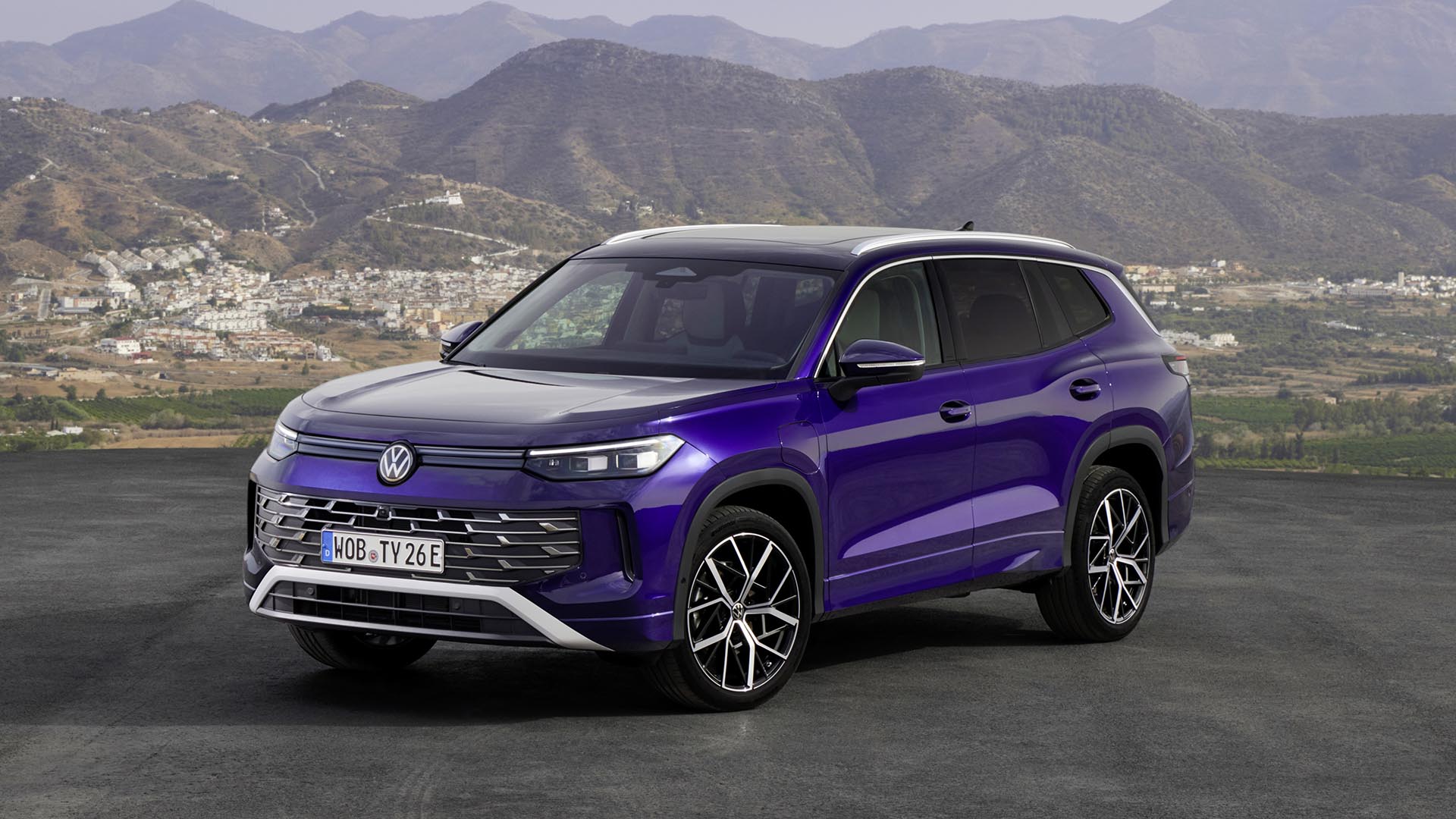
The Volkswagen Tayron is the latest addition to VW’s SUV lineup, offering a blend of European refinement, modern technology, and generous space. For those familiar with the Tiguan, think of the Tayron as an XL-sized sibling that delivers everything the Tiguan offers, but with added advantages, including a third row of seats and significantly more interior space. In many ways, the Tayron is to the new Tiguan what the Tiguan Allspace was to the previous generation – a larger, more practical, and premium alternative.
Priced in India at an expected ₹57.91 lakh (on-road), the Tayron is designed to appeal to buyers who prioritize space, luxury, and driving comfort without compromising on European design cues and engineering precision.
Exterior Design: Familiar Yet More Commanding
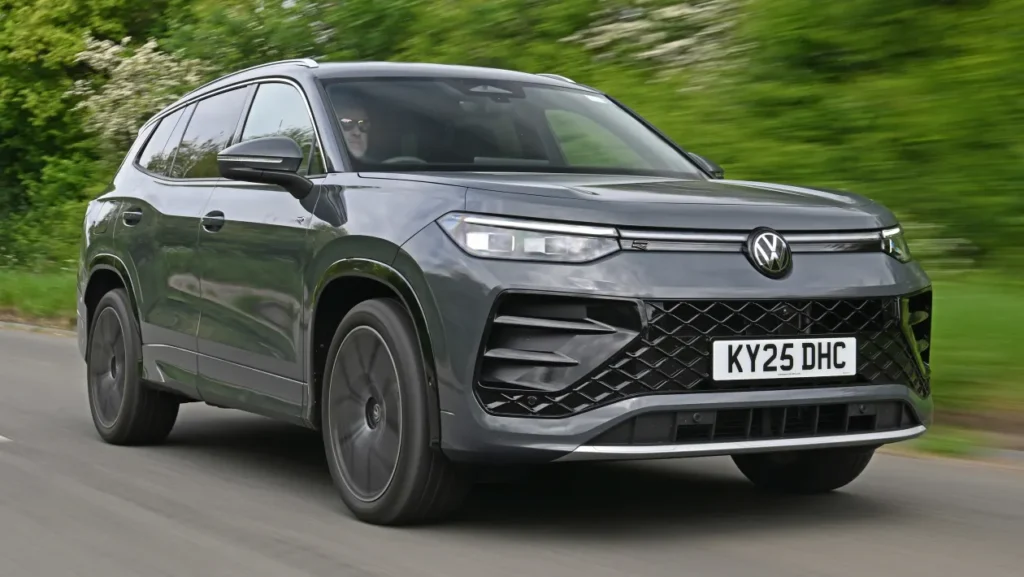
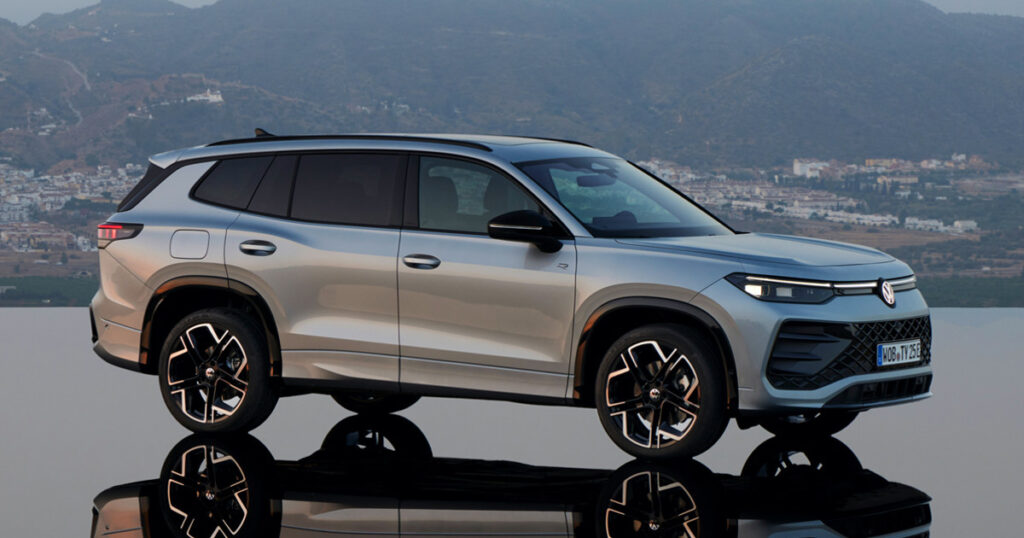
At first glance, the Tayron bears a strong resemblance to the Tiguan, but a closer inspection reveals subtle yet impactful differences. The Matrix LED headlights are slightly redesigned, featuring a slimmer connecting panel and a full-width light bar that adds a contemporary flair. The VW logo even illuminates, complementing the sophisticated LED setup. The R-Line variant flaunts a sportier fascia with large gloss-finished mesh sections, wide air intakes with prominent slats, and aerodynamic channels on the bumper edges.
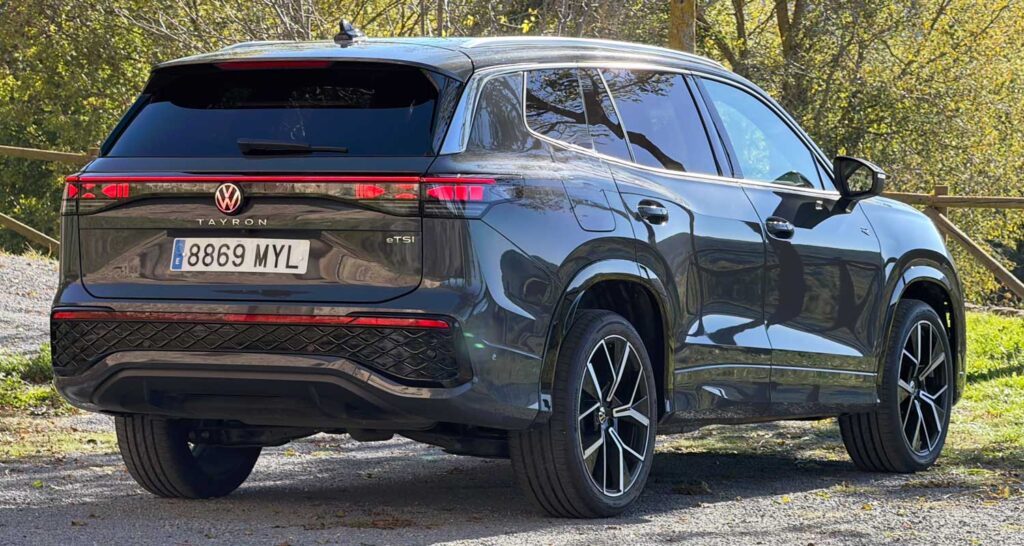
The Tayron’s proportions make it stand out. Its wheelbase is 109mm longer than the Tiguan, and the extended rear overhang adds an additional 253mm to the vehicle’s overall length, pushing it to 4,792mm. Gloss effects on the side mirrors and wheel arches, along with a swelled shoulder line from the rear doors to the tail, lend a premium and robust stance. A silver surround that dips from the roof to the rear glass section adds elegance to the side profile.
At the rear, the Tayron features intricately designed LED tail lights connected by a light bar and a glowing VW logo. The R-Line sports a gloss mesh design on the lower bumper, though the exhaust pipes remain hidden. Even though a lower trim is expected later this year with simplified detailing and wheels, the current design exudes sophistication and sporty character.
Underneath, the Tayron shares its platform with the Skoda Kodiaq, making it a monocoque-bodied SUV with near-identical size and engine specifications.
Interior Space: Comfort and Premium Feel
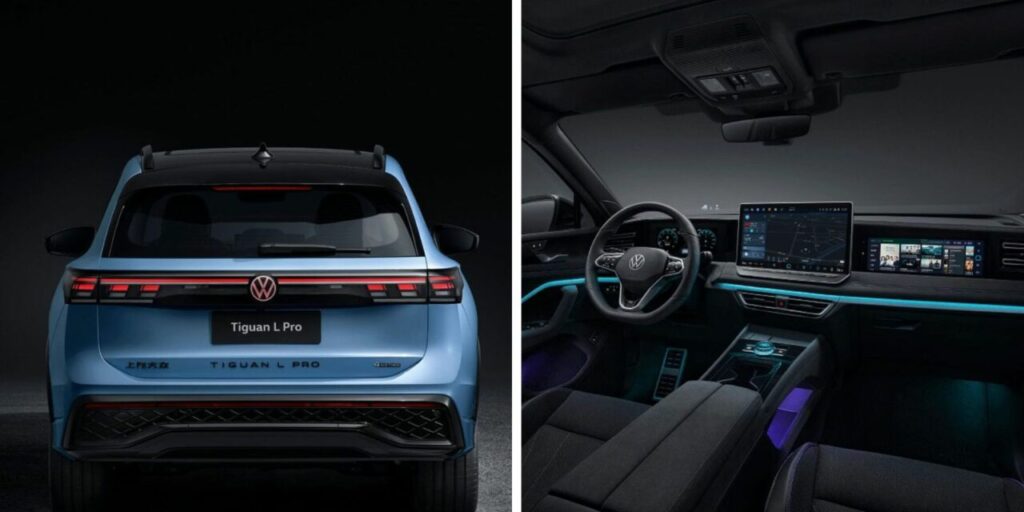
Step inside the Tayron, and the familiar Volkswagen quality is immediately apparent. From the solid door closure to the premium materials, the cabin feels refined and durable. The seats are plush and supportive, offering a comfortable ride for all occupants. The Alcantara-like trim, ambient lighting, and minimalist dash design combine to create a modern, upscale environment.
Dashboard and Controls
The dashboard is dominated by a massive 15-inch touchscreen that handles almost all vehicle functions, from navigation and media to climate control and seat ventilation. Physical buttons are largely absent, but the layout is intuitive, with large tabs for essential functions. Touch-sensitive sliders below the screen allow for temperature and volume adjustments, although they lack the tactile feedback of traditional buttons.
A rotary knob on the center console provides control over volume, drive modes, and ambient lighting themes. The traditional gear lever is replaced by a stalk behind the steering wheel, freeing up substantial space on the center console for additional storage.
Storage and Practicality
The Tayron excels in storage solutions. Two wireless charging pads sit beneath a flip-up panel at the base of the dashboard, accompanied by twin USB Type-C ports. The center console features a removable cupholder module and a large storage bin under the armrest. Door pockets are felt-lined and generously sized, while the glovebox provides ample room for essentials.
Seating and Passenger Space
The second row offers plenty of legroom, with a 60:40 split bench that slides fore and aft to balance comfort for second- and third-row passengers. The backrest reclines up to 15 degrees, though the center seat is less comfortable due to the high center tunnel. A foldable center armrest with an adjustable cupholder improves convenience for two passengers.
The third row is best suited for occasional use. Access is tight since the larger second-row seat slides but does not tumble forward, and knee and headroom are limited. Short trips are manageable, but taller adults may find it cramped.
Even with all seats in use, the Tayron provides ample luggage space for cabin bags. Folding the third row expands capacity to 850 liters, and dropping the second row creates a massive 1,900-liter cargo area rivaling many commercial vans. A powered tailgate with gesture control is a welcome addition, not offered on the Tiguan.
Features and Safety
The Tayron is generously equipped, especially the R-Line variant. Front seats are powered, ventilated, and come with memory, massage, and heating functions. Rear passengers enjoy sunshades, and the cabin features three-zone climate control, a panoramic sunroof, a 10.25-inch digital instrument cluster, and an 11-speaker Harman Kardon audio system.
Safety is addressed with a full suite of ADAS features, including lane-keep assist, automatic emergency braking, adaptive cruise control, driver drowsiness detection, and auto park. The Tayron also comes with nine airbags, ABS, electronic stability control, tyre pressure monitoring, and hill-hold assist, making it a highly secure option for family buyers.
Performance and Driving Dynamics
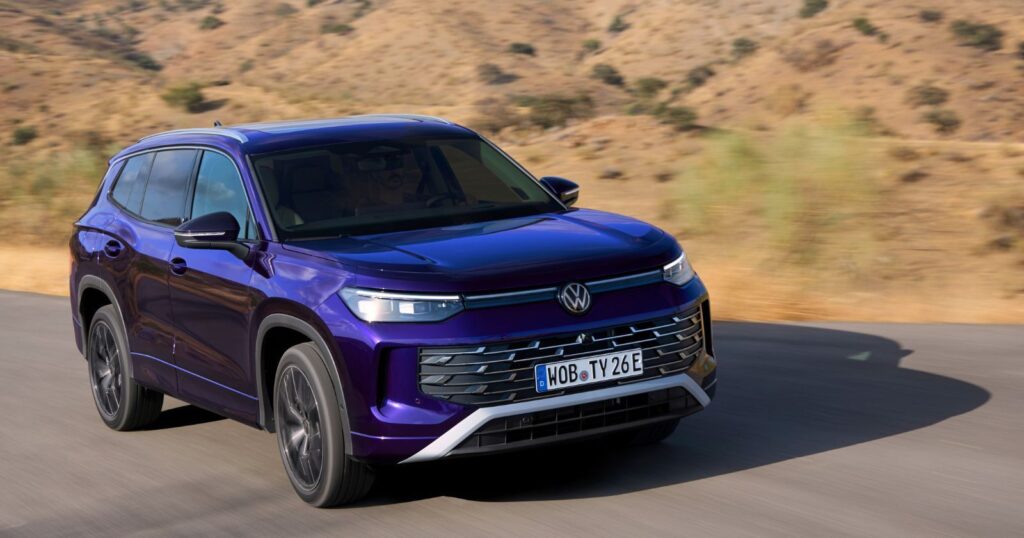
Under the hood, the Tayron is powered solely by a 2.0-liter turbo-petrol engine shared with the Skoda Kodiaq. Producing 204hp and 320Nm of torque, it sends power to all four wheels via a seven-speed dual-clutch automatic transmission. Volkswagen claims a 0-100 km/h acceleration of 7.3 seconds and a top speed of 224 km/h.
The engine is smooth, responsive, and delivers power across a wide RPM range. Its sporty exhaust note enhances the driving experience, from gravelly low-end tones to a throatier growl at higher speeds. The dual-clutch gearbox complements the engine with seamless shifts, particularly on highways, while the all-wheel-drive system adds confidence in adverse weather conditions.
Ride Comfort and Handling
The Tayron offers multiple drive modes that adjust steering, engine response, and AWD behavior. Switching from Comfort to Sport sharpens the steering and adds responsiveness. While it lacks Dynamic Chassis Control, the ride is stable even at high speeds, with minimal vertical movement over bumps and potholes.
The handling is classic Volkswagen – predictable, precise, and confidence-inspiring. Despite its length, the Tayron feels nimble and is easy to drive in urban environments. Steering is well-weighted at speed yet light enough for city maneuvering.
Fuel Economy
Volkswagen has not yet released official fuel economy figures for the India-spec Tayron. As a turbo-petrol SUV, consumption will vary significantly based on driving style, with city driving likely reducing efficiency to the mid single digits.
Value for Money and Pricing
The Tayron is expected to be priced around ₹46-48 lakh (ex-showroom), making it more affordable than the fully imported Tiguan while offering a larger, more feature-rich package. A lower trim variant is expected later this year, which could broaden its appeal further.
European car enthusiasts will appreciate the Tayron’s contemporary design, well-equipped cabin, and premium feel. Downsides include the learning curve for touch-based controls and the limited practicality of the third row for adults. Nonetheless, the Tayron delivers a spacious, comfortable, and polished package for buyers in the ₹50 lakh SUV segment.
Volkswagen Global Official Site – Tayron
Anchor: Volkswagen Tayron official specifications
https://www.volkswagen.com
- Link to the recent travel‑friendly perfume article itself
- https://skinnyzine.com/solid-perfumes-under-rs-499-compact-chic/
(self‑linking different sections)