




India’s largest IT services company, Tata Consultancy Services (TCS), may be preparing for its next major rally — at least that’s what global brokerage firm CLSA believes. In its latest research note, CLSA has turned decisively bullish on the IT heavyweight, assigning it an “Outperform” rating and setting a 12-month target price of ₹3,593.
From current levels, that represents an upside potential of nearly 34%.
But what exactly is driving this optimism? According to CLSA, the answer lies in strong SaaS implementation demand, rising enterprise AI adoption through its long-standing partnership with ServiceNow, attractive cash returns, and potential shareholder-friendly actions such as dividends and buybacks.
Let’s break down the full picture.
Why CLSA Is Turning Positive on TCS
CLSA’s report, titled “Business-as-usual for SIs,” makes a strong case that despite global macro noise and cautious client spending, structural demand in enterprise technology remains intact — particularly in Software-as-a-Service (SaaS) implementation.
According to the brokerage, narratives around slowdown risks have overshadowed the core reality: enterprises continue to modernize systems, automate workflows, and adopt AI-driven tools. And that is where TCS is well positioned.
The brokerage’s positive thesis rests on four key pillars:
- Continued SaaS implementation demand
- Strong growth outlook for ServiceNow
- Attractive free cash flow yield and dividend support
- Buyback possibility following tax changes
Together, these could drive the next leg of outperformance.
SaaS Implementation: The Core Growth Engine

CLSA makes it clear — SaaS implementation remains a major growth driver for system integrators (SIs) like TCS.
Enterprises across industries are accelerating their transition toward cloud-based automation platforms. Instead of building in-house IT systems, companies are relying on SaaS platforms to manage:
- IT service management
- IT operations
- Human resource workflows
- Customer service processes
- Security operations
A significant player in this ecosystem is ServiceNow — a long-term strategic partner of TCS.
TCS–ServiceNow Partnership: A Decade of Collaboration, Now AI-Focused
TCS and ServiceNow have collaborated for over a decade. But the partnership has evolved significantly in recent years.
CLSA highlights that the collaboration is now centered on accelerating large-scale enterprise AI adoption. The goal? Transform manual, fragmented, and siloed business processes into intelligent, self-learning workflows.
This multi-year partnership aims to build industry-specific AI solutions capable of:
- Automating repetitive workflows
- Enhancing decision-making
- Reducing operational inefficiencies
- Improving customer experiences
- Creating autonomous, learning systems
ServiceNow itself has strengthened its AI capabilities by partnering with foundation model companies like OpenAI and Anthropic. These collaborations enhance the AI functionality embedded within the ServiceNow platform.
For TCS, that means larger enterprise transformation mandates and higher-value consulting opportunities.
ServiceNow’s Strong Growth Outlook Supports TCS
CLSA points to ServiceNow’s impressive financial performance as a leading indicator for TCS.
- ServiceNow grew 20.5% year-on-year (constant currency) in FY25.
- It has guided for 19.5%–20% growth in FY26.
Importantly, this growth guidance is backed by a strong order book.
Why does that matter for TCS?
Because system integrators that have strong partnerships with SaaS platforms often benefit proportionately from implementation demand. As enterprises sign new contracts with ServiceNow, implementation, customization, integration, and ongoing support work flows to partners like TCS.
In other words, ServiceNow’s growth pipeline could directly translate into sustained demand for TCS services.
Industry Tailwinds: 10% CAGR in System & Service Management Software
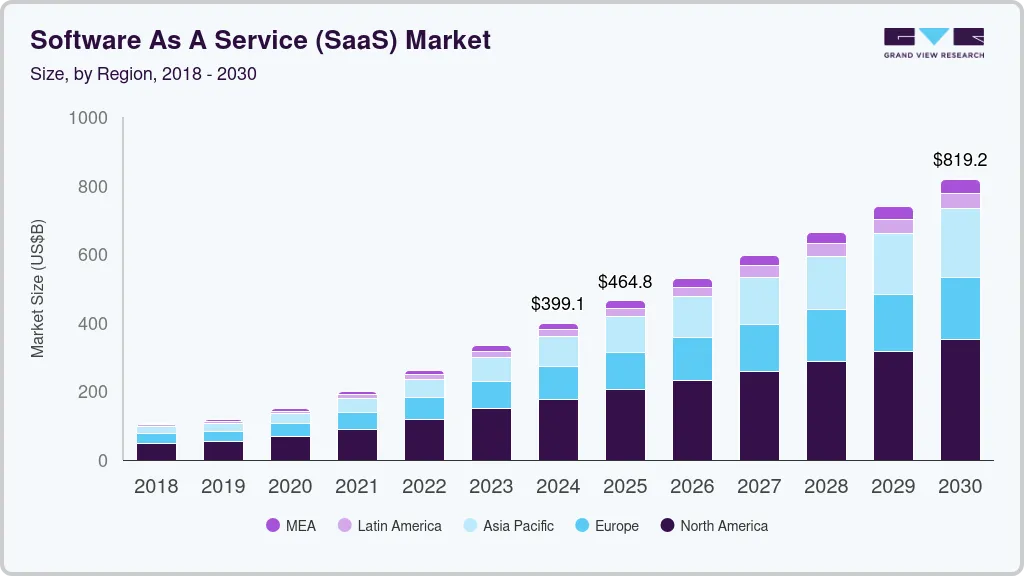
CLSA also cites data from International Data Corporation (IDC), which projects that the global system and service management software market will grow at a 10% compound annual growth rate (CAGR) between 2024 and 2029.
Currently, this segment accounts for roughly 4% of total global software spending.
The implication? While it may not be the largest slice of the software market, it is growing steadily and in line with overall enterprise technology budgets.
For companies like TCS that are deeply integrated with leading platforms in this category, this represents a long runway of opportunity.
Certifications & Competitive Positioning

CLSA also conducted a comparative analysis of major large-cap IT firms in the ServiceNow ecosystem.
According to the brokerage:
- TCS holds 2,230 total ServiceNow certifications
- Certifications per employee stand at 0.38%
- ServiceNow ranking: 9
- Customer satisfaction score: 4.16 out of 5
TCS has been classified as an “Elite” partner across multiple categories including service provider and consulting & implementation.
Peers evaluated in the comparison include:
- Infosys
- HCL Technologies
- Wipro
- LTIMindtree
- Tech Mahindra
- Accenture
- Cognizant
- Capgemini
Interestingly, CLSA notes that certification growth has moderated across the industry. The number of ServiceNow certifications has declined for many firms, and certifications as a percentage of employee base have also reduced.
Despite this industry-wide slowdown, TCS continues to hold strong positioning within the partner ecosystem.
Financial Support: 6% Free Cash Flow Yield

Beyond growth drivers, CLSA highlights financial comfort as another key reason for optimism.
TCS currently offers nearly a 6% free cash flow yield — a compelling metric in a volatile macro environment.
A strong free cash flow profile enables:
- Sustainable dividends
- Share buybacks
- Strategic investments
- Margin protection during slowdowns
CLSA has built in a ₹35 dividend assumption for the fourth quarter in its projections.
Dividend visibility often provides downside support to IT stocks, especially during periods of uncertain discretionary demand.
Buyback Possibility After Tax Changes
Another shareholder-friendly catalyst mentioned by CLSA is the potential for a share buyback.
Recent favorable tax changes could make buybacks more attractive from a capital allocation standpoint.
TCS has historically used buybacks as a tool to return capital to shareholders. If management announces another round, it could act as a strong trigger for stock re-rating.
Buybacks also signal management confidence in future cash flows.
Revenue and Earnings Outlook
CLSA’s projections suggest moderate but steady growth.
- FY25 revenue: ~₹2.55 lakh crore
- FY26 revenue estimate: ~₹2.65 lakh crore
- FY26 EPS: ₹135.4 (0.9% growth YoY)
- FY27 EPS growth: expected to accelerate to 11.8%
The brokerage expects near-term earnings growth to remain muted but anticipates stronger momentum in FY27 as demand normalizes and AI-led transformation budgets expand.
Valuation Approach: PE and DCF Combination
CLSA has used a blended valuation model to arrive at its target price.
1. Price-to-Earnings (PE) Method – 75% Weight
A multiple of 23x earnings has been applied for the 4QFY27–3QFY28 period. This multiple is close to TCS’s 10-year historical average.
2. Discounted Cash Flow (DCF) Method – 25% Weight
Key assumptions include:
- 5% long-term growth rate
- 11.4% cost of capital
Using this framework, CLSA arrives at a target price of ₹3,593.
Risks to the Bullish Thesis
While constructive on TCS, CLSA also outlines downside risks investors should monitor carefully:
1. Weak Deal Wins
If large deal wins slow down, revenue growth could fall below estimates.
2. Pricing Pressure
Intensified competition may force pricing concessions, affecting margins.
3. Rupee Appreciation
A stronger rupee against the US dollar in FY26–FY27 could impact export earnings.
4. Market Share Loss
Failure to secure mega deals may allow global and domestic peers to capture share.
5. US Macro Uncertainty
Uncertainty around US policies, tariffs, inflation, and bond yields could dampen enterprise spending.
Given that the US remains the largest market for Indian IT services firms, macro instability remains a key watchpoint.
The Bigger Picture: AI and Enterprise Transformation
The structural shift toward AI-driven enterprise transformation appears irreversible.
Organizations globally are investing in:
- Workflow automation
- Predictive analytics
- Intelligent service management
- AI-assisted customer interaction
Through its ServiceNow partnership and deep consulting capabilities, TCS is positioning itself not just as a technology vendor but as a transformation partner.
If SaaS and AI adoption trends continue at current pace, the company could benefit from multi-year tailwinds.
👉 TCS set for a strong rally? 4 reasons CLSA sees 33% upside potential (Financial Express) — discusses the positive outlook by CLSA, the ₹3,593 target, and key drivers behind the bullish view.
Here are internal link suggestions you can use within your content on the AIIMS NORCET 10 Recruitment 2026 page (https://skinnyzine.com/aiims-norcet-10-recruitment-2026/)