





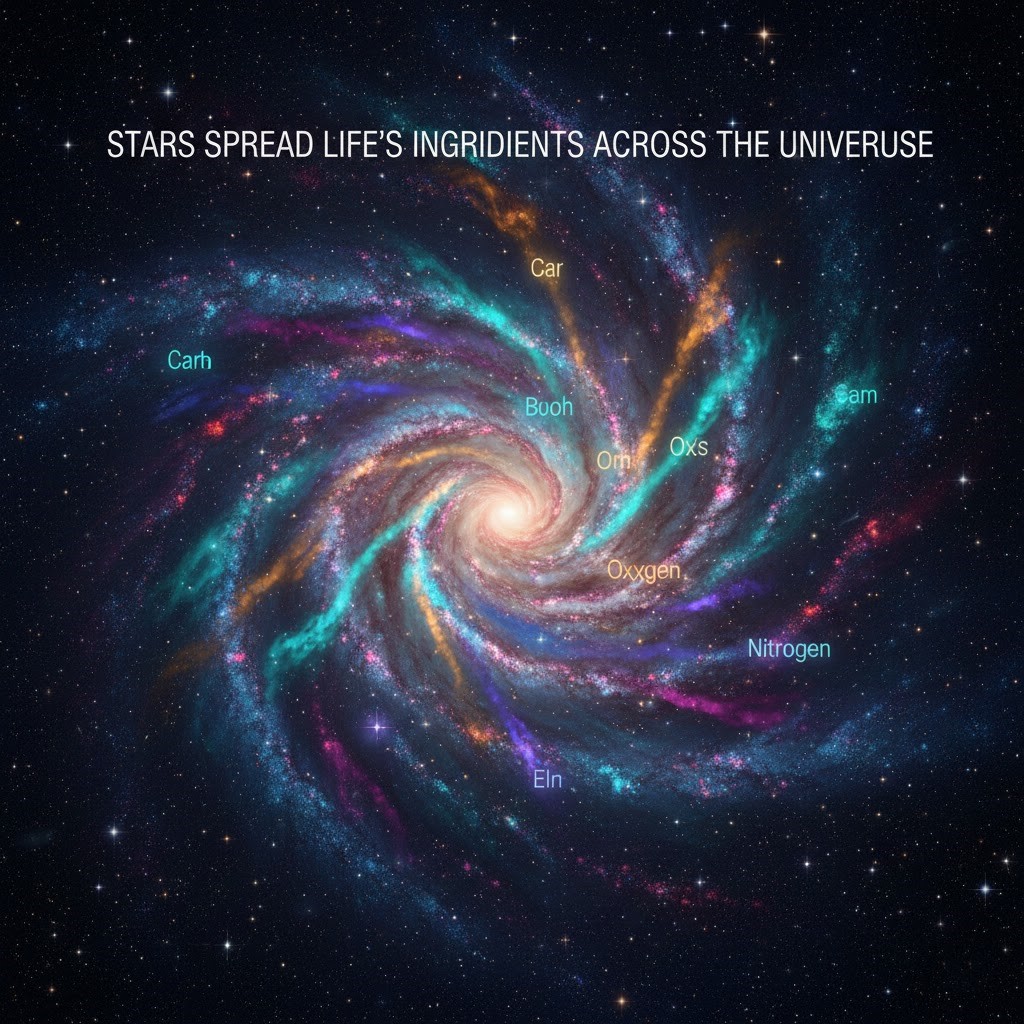
For decades, astronomers believed they had a fairly solid understanding of how the Stellar Life Ingredients—carbon, nitrogen, oxygen, and complex organic molecules—were spread across the galaxy. According to the long-standing theory, massive stars forged these elements in their cores and dispersed them primarily through violent supernova explosions at the end of their lives. These cataclysmic events were thought to be the main cosmic delivery system, seeding interstellar space with the raw materials needed to form planets and, eventually, life.
However, a new wave of astronomical observations and theoretical models is now overturning this decades-old assumption. Recent studies suggest that stars may distribute life’s ingredients far earlier and far more gently than previously believed. Instead of relying mainly on stellar death, the cosmos may be enriched during a star’s lifetime through stellar winds, radiation-driven outflows, and complex chemical processes occurring in star-forming regions. This paradigm shift is reshaping our understanding of how life-friendly chemistry spreads throughout the universe.
The Traditional Theory: Supernovae as Cosmic Seeders
How the Old Model Worked
The classical model of cosmic chemical enrichment placed supernovae at center stage. In this view, heavy elements and organic precursors—the very Stellar Life Ingredients necessary for life—were locked inside stars for millions or billions of years. Only when a massive star exhausted its nuclear fuel and exploded would these materials be blasted into surrounding space.
Supernova shockwaves were believed to serve two crucial functions:
- Dispersal of Elements – Explosions flung newly forged atoms across vast interstellar distances.
- Triggering New Star Formation – Shockwaves compressed nearby gas clouds, helping new stars and planetary systems form.
This model neatly explained why younger stars and planets contained heavier elements than the earliest stars formed after the Big Bang.
Why Scientists Accepted It for So Long
The supernova-centric theory persisted because it matched early observations and fit well with basic nuclear physics. Spectroscopic studies showed heavy elements in supernova remnants, and meteorites in our own solar system contained isotopic signatures consistent with nearby stellar explosions. For many years, there was little reason to question the idea.
Cracks in the Old Theory Begin to Appear
Unexpected Chemistry in Young Star Systems
As telescopes became more powerful, astronomers began detecting complex organic molecules—the essential Stellar Life Ingredients—in places they did not expect, such as cold molecular clouds and very young star-forming regions. Remarkably, these environments existed long before any nearby stars could have gone supernova.
In some cases, researchers found molecules like methanol, formaldehyde, and even amino acid precursors embedded in dust grains surrounding newborn stars. This raised an uncomfortable question: If no supernova had occurred yet, where did these life-related molecules come from?
Observations That Didn’t Fit the Model
Several puzzling observations challenged the traditional theory:
- Chemical richness in early galaxies, too soon after the Big Bang for many supernova cycles.
- Organic molecules in stellar nurseries, predating massive stellar deaths.
- Isotopic ratios that could not be easily explained by supernova-only enrichment.
Together, these anomalies hinted that another, previously underestimated mechanism might be at work.
The New Theory: Stars Spread Life’s Ingredients While Alive
Stellar Winds as Chemical Messengers
One of the most significant shifts in thinking involves stellar winds. Stars, especially massive and moderately massive ones, constantly lose material throughout their lives. These outflows, driven by radiation pressure and magnetic activity, can carry atoms and molecules—the very Stellar Life Ingredients—into surrounding space, enriching the cosmos long before any supernova occurs.
New models show that these winds are not chemically inert. Instead, they can transport carbon-rich compounds and other key elements into nearby molecular clouds, enriching them long before a supernova occurs.
Radiation-Driven Chemistry in Space
Ultraviolet radiation from stars was once considered mainly destructive to complex molecules. While intense radiation can indeed break chemical bonds, recent laboratory experiments and simulations reveal a more nuanced picture: some molecules, including key Stellar Life Ingredients, can survive or even form under stellar ultraviolet exposure.
Under the right conditions, stellar radiation can actually drive chemical reactions on the surfaces of icy dust grains. These reactions can build increasingly complex organic molecules, effectively turning interstellar space into a vast chemical laboratory.
Star-Forming Regions: Factories of Prebiotic Chemistry
The Role of Molecular Clouds
Giant molecular clouds are cold, dense regions of gas and dust where stars are born. These clouds are now recognized as key sites for prebiotic chemistry. Even before stars ignite, chemical reactions on dust grains can produce simple organic molecules.
As new stars begin to shine within these clouds, their energy further accelerates chemical complexity rather than destroying it outright.
Protostars and Chemical Feedback
Protostars—the earliest stage of stellar development—emit heat and radiation that alter their surroundings. According to the new theory, this feedback plays a crucial role in spreading and enhancing key Stellar Life Ingredients, seeding nearby regions with the building blocks necessary for planets and, potentially, life.
Instead of waiting for a dramatic stellar death, chemistry unfolds continuously during star birth and growth.
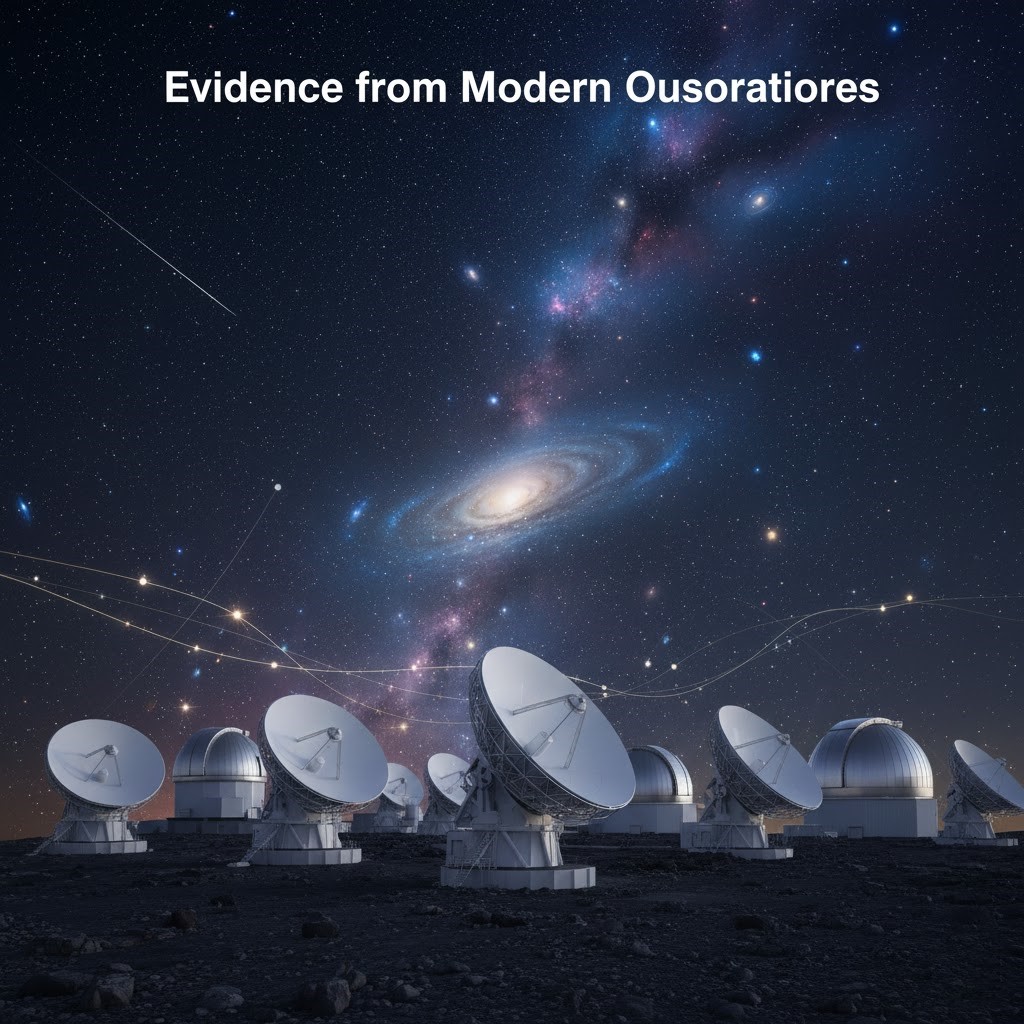
Evidence from Modern Observatories
ALMA and the Chemical Universe
The Atacama Large Millimeter/submillimeter Array (ALMA) has been instrumental in supporting this revised view. ALMA has detected complex organic molecules in protoplanetary disks—the rotating disks of gas and dust that form planets—revealing the presence of crucial Stellar Life Ingredients early in planetary systems.
These observations suggest that planets may inherit life’s building blocks directly from their birth environments, rather than relying solely on later delivery by asteroids or comets.
James Webb Space Telescope Insights
The James Webb Space Telescope (JWST) has further strengthened the case. Its infrared instruments can peer into dusty star-forming regions and identify chemical signatures previously hidden from view, including vital Stellar Life Ingredients that help explain how life’s building blocks are distributed across the cosmos.
JWST data reveal that organic chemistry is widespread and begins astonishingly early in the star formation process.
Overturning a Core Assumption in Astrobiology
Life’s Ingredients Are More Common Than Thought
If stars distribute organic materials throughout their lifetimes, the implications for astrobiology are profound. Life’s raw ingredients may be far more abundant and widespread than previously assumed.
This increases the likelihood that many planets form already equipped with the chemical toolkit needed for life.
Rethinking the Rarity of Life
The old supernova-focused model implied that life-friendly chemistry was relatively rare and dependent on specific, violent events. The new framework paints a more optimistic picture, where chemical enrichment is a natural and ongoing feature of galaxy evolution.
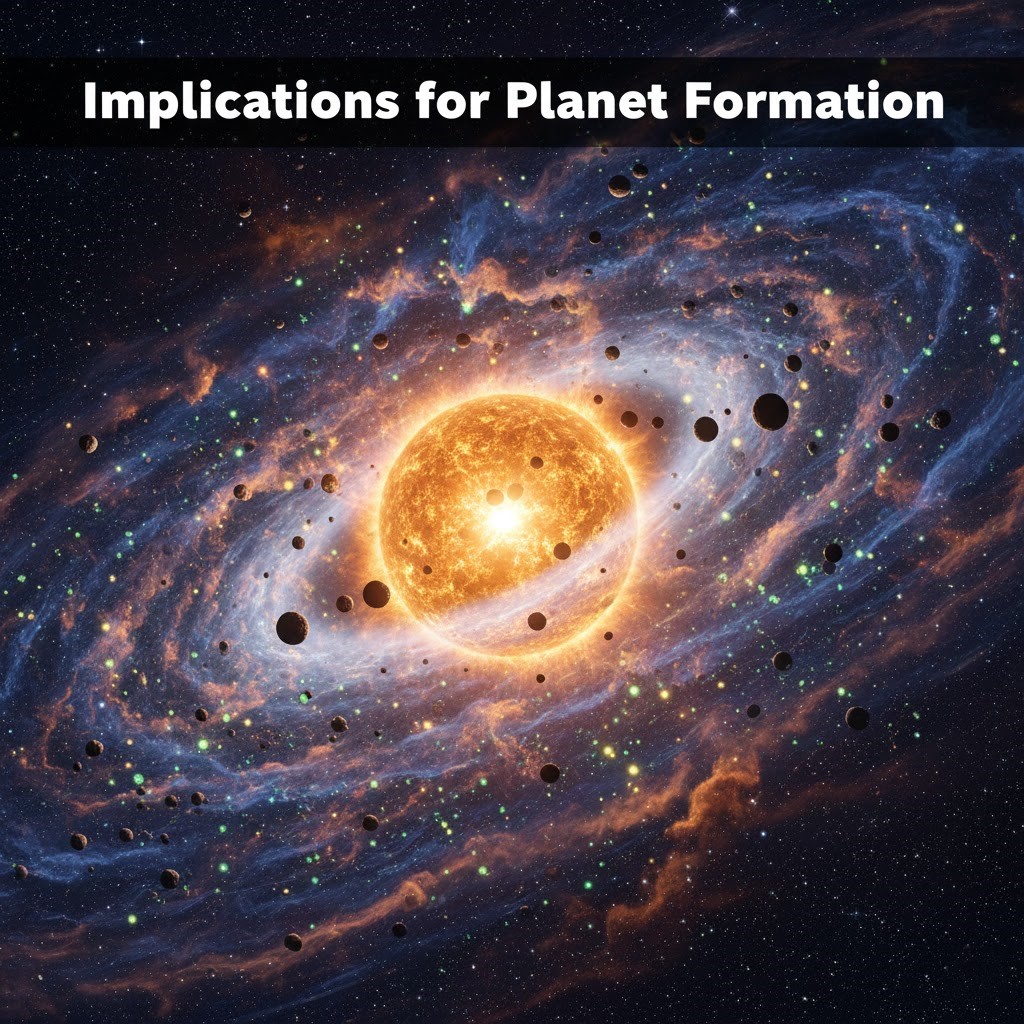
Implications for Planet Formation
Planets Born with Built-In Chemistry
Under the revised theory, protoplanetary disks are not chemically blank slates. Instead, they are rich in organics from the very beginning. This means planets may form with oceans, atmospheres, and surfaces already seeded with prebiotic molecules.
Reducing the Need for External Delivery
Previously, scientists believed comets and asteroids played the dominant role in delivering organic material to young planets. While these processes remain important, they may no longer be the primary source of life’s ingredients.
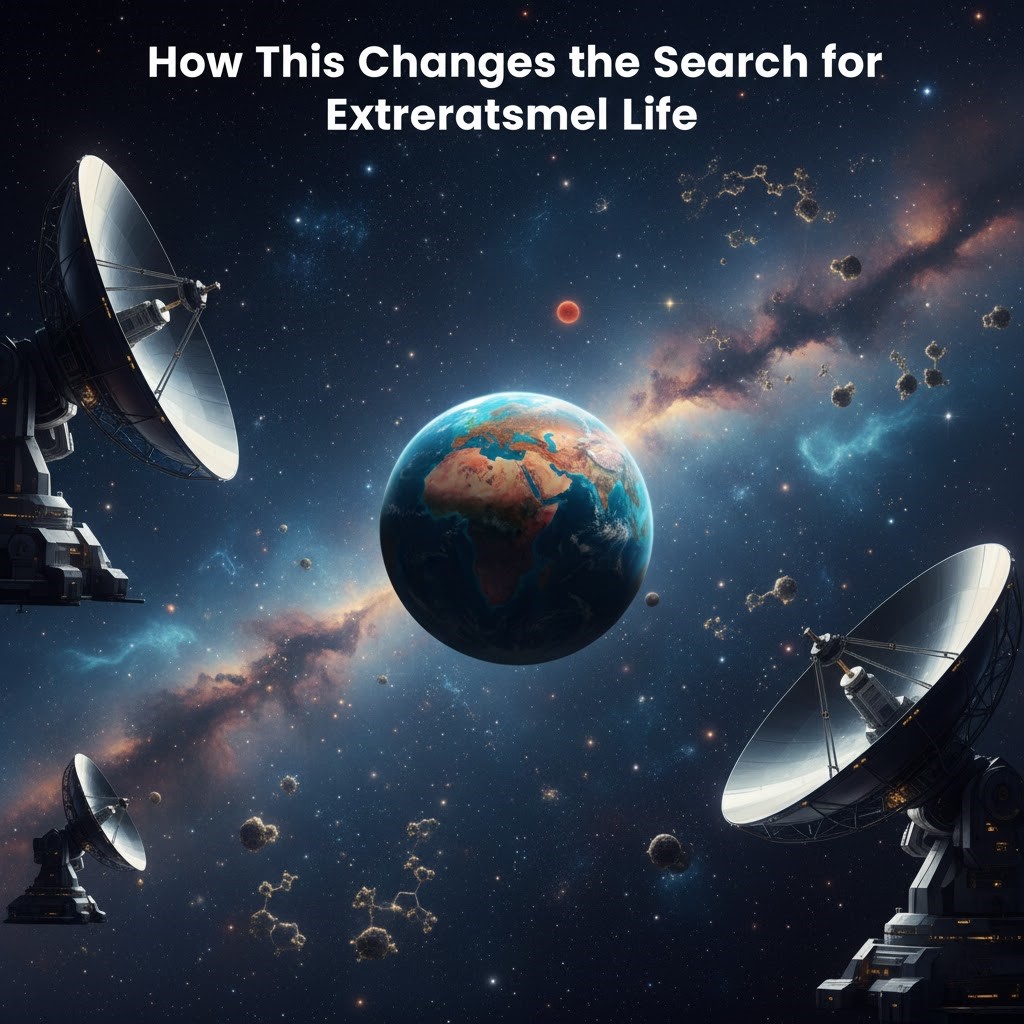
How This Changes the Search for Extraterrestrial Life
Expanding the Habitable Zone Concept
Habitability is no longer just about temperature and liquid water. Chemical availability now takes center stage. Planets forming in regions rich with essential chemicals might get an early advantage in developing life, even if their environments change later on.
Targeting Chemically Rich Systems
Future searches for life may prioritize star systems known to host organic-rich disks. By identifying where chemistry flourishes early, astronomers can refine targets in the search for biosignatures.
Addressing Remaining Questions and Skepticism
Are Stellar Winds Enough?
Some scientists caution that while stellar winds contribute significantly, supernovae still play an important role in distributing heavy elements across galaxies. The emerging consensus is not an either-or scenario, but a more complex, multi-stage enrichment process.
Limits of Current Observations
Despite groundbreaking discoveries, observational limitations remain. Many chemical pathways are inferred indirectly, and laboratory simulations are still refining reaction models.
A New Unified Model of Cosmic Chemistry
Combining Old and New Ideas
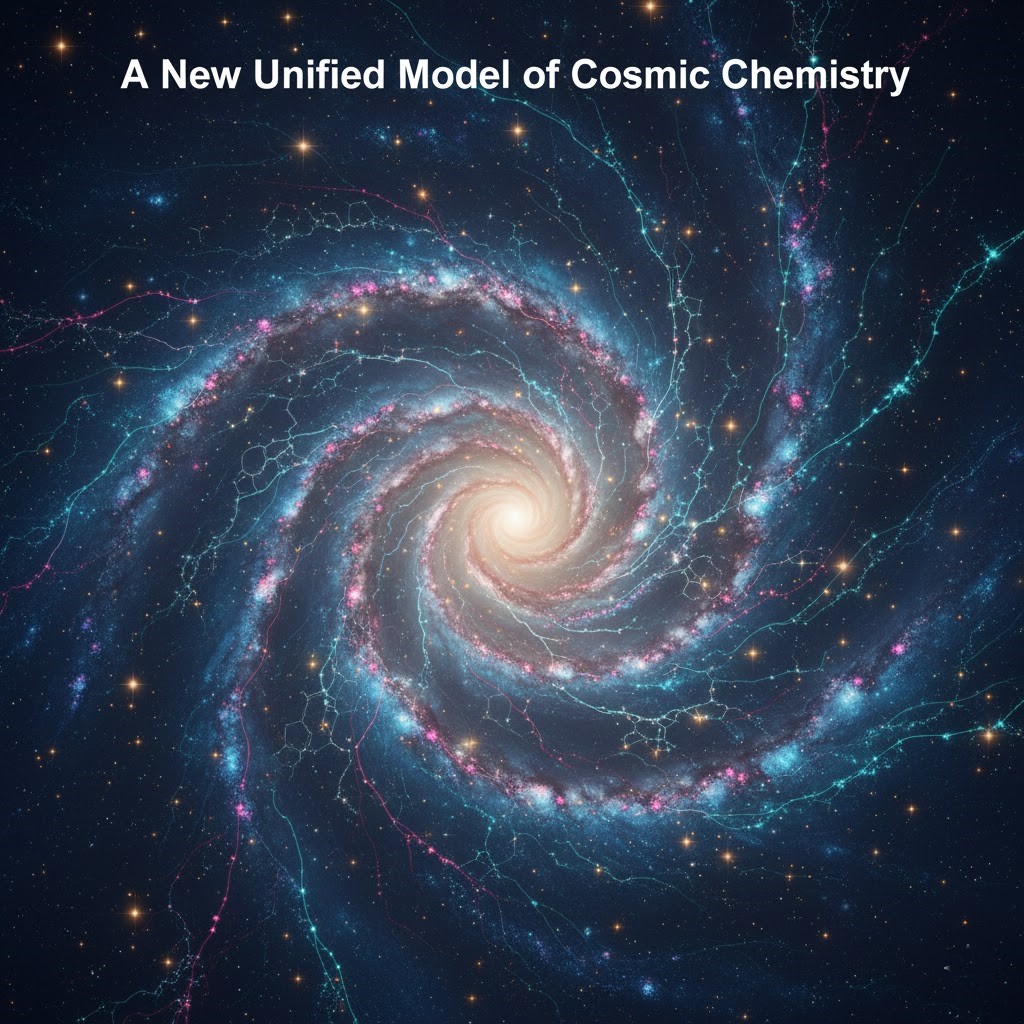
Rather than discarding the supernova model entirely, astronomers are integrating it into a broader framework. In this unified view:
- Living stars enrich nearby space early on
- Supernovae provide large-scale distribution later
- Star-forming regions continuously recycle chemistry
This holistic approach better matches the growing body of observational evidence.
The James Webb Space Telescope (JWST) has further strengthened the case. Its infrared instruments can peer into dusty star-forming regions and identify chemical signatures previously hidden from view, including vital Stellar Life Ingredients that help explain how life’s building blocks are distributed across the cosmos NASA – JWST
Just as groundbreaking research in medical science—such as the exploration of the cellular missing link breakthrough in neurodegenerative and cancer therapy on Skinnyzine—reshapes our understanding of biology, new astronomical evidence is now overturning long‑held theories about how stars distribute life’s chemical building blocks.