




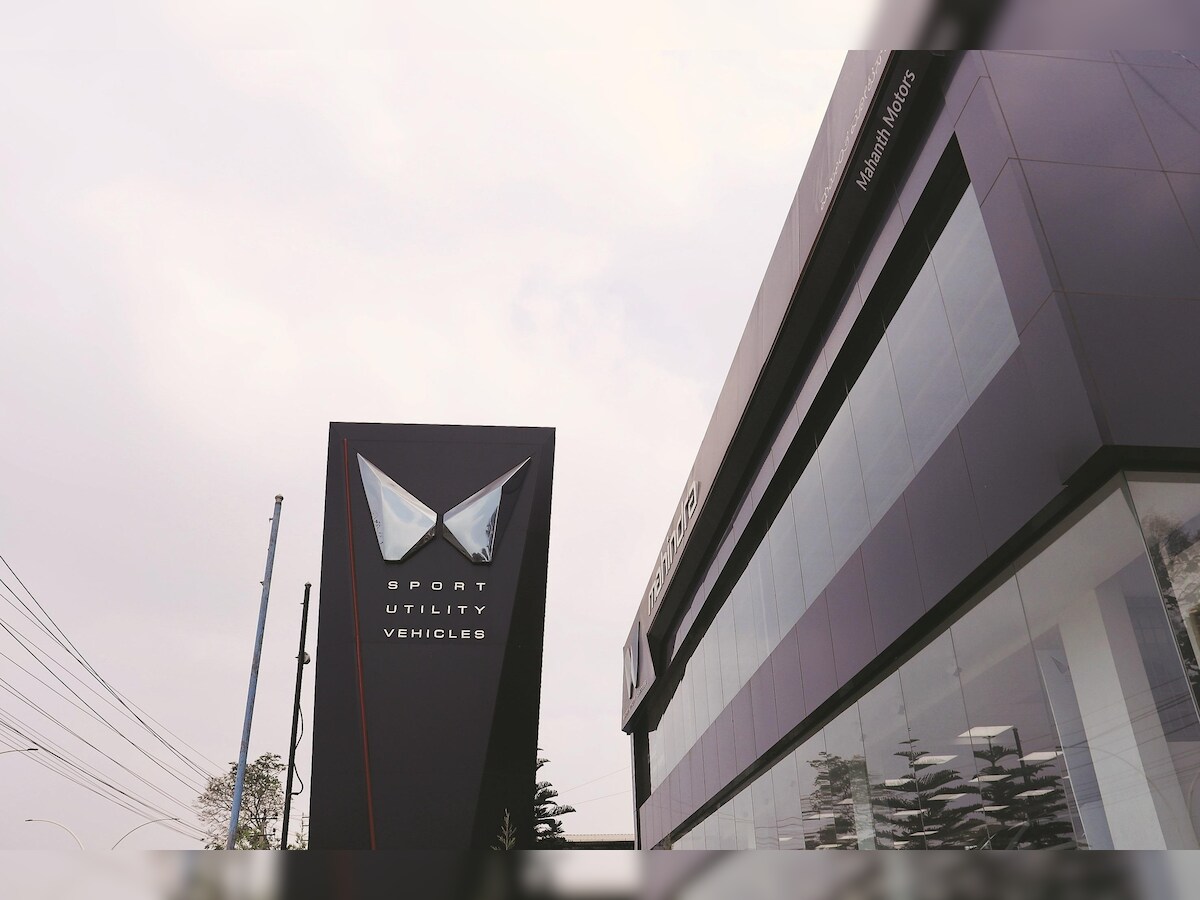
Mahindra & Mahindra (M&M), one of India’s most influential and innovation-driven conglomerates, has unveiled a bold and transformative decade-scale expansion strategy with the automotive business firmly at its core. Over the next ten years, M&M aims to redefine its role not only in India’s mobility landscape but also in global markets. With strategic investments in SUVs, electric vehicles (EVs), global platforms, light commercial vehicles, and mobility ecosystems, the company’s future vision is large, multi-dimensional and deeply aligned with international mobility trends.
This long-term plan is more than just a corporate roadmap—it marks a shift to future-ready technology, export-focused scaling, and category leadership in multiple auto segments. With the automotive arm serving as the engine of growth, M&M seeks to achieve dramatic increases in revenue, market share, and global influence.
1. Understanding the Decade-Scale Vision
M&M’s decade-scale expansion strategy emerges from a detailed assessment of mobility trends, consumer behaviour, technological disruption, and global competition. The overarching vision is to turn M&M into a globally recognized brand in SUVs, electric mobility, and next-generation automotive technologies.
Key Pillars of the Vision
- Reinforcing leadership in India’s booming SUV market
- Accelerating transition to next-generation EVs
- Building globally scalable vehicle platforms
- Expanding into high-value export markets
- Strengthening the LCV and pickup vehicle portfolio
- Increasing revenue and profitability through sustained innovation
The foundation of the plan lies in building scale, technology, and resilience. M&M’s strategic clarity—placing the auto business at the centre—demonstrates its belief in the high-growth potential of the mobility sector over the coming decade.
2. Why Auto Becomes the Core Growth Engine
Strong Market Leadership in SUVs
M&M has been dominating India’s SUV segment with blockbuster models like the Thar, Scorpio-N, XUV700, and Bolero Neo. The surge in consumer preference for utility-focused vehicles strengthens M&M’s decision to prioritize the auto vertical.
Increasing SUV Penetration in India
SUVs have grown from a niche segment to a mainstream choice, accounting for more than half of passenger vehicle sales. M&M aims to ride this wave and scale faster than the market average.
Superior Brand Recall in Adventure & Off-Roading Segment
The company commands unmatched brand equity in rugged, adventure, off-road and outdoor-lifestyle vehicles. This distinct identity plays a major role in positioning the brand for global expansion.
Disruptive Opportunity in Electric Mobility
Electric vehicles are expected to transform the auto sector over the next decade. M&M wants to become a leader in:
- Electric SUVs
- Urban shared mobility models
- Next-generation EV platforms like INGLO
Positioning automotive as the core allows M&M to invest heavily in EV R&D, battery systems, digital mobility, connectivity solutions, and autonomous capability.
3. Revenue Targets and Projected Growth Metrics
One of the most striking elements of M&M’s decade-long strategy is the aggressive revenue growth projection.
Eight-Fold Increase in Auto Revenue
M&M expects its automotive division to achieve 8× revenue growth from FY20 to FY30, reflecting the ambition to scale up rapidly by expanding product lines, exports, and EV penetration.
Multi-Year CAGR Across Businesses
The company is targeting organic growth across its divisions as follows:
- Auto: ~20% CAGR
- Farm Equipment: Medium growth with global strengthening
- Services, logistics, real estate, clean energy: High-potential emerging segments
The auto business is expected to contribute the highest share of the group’s incremental revenues.
Investment Commitments and Capex Strategy
M&M has announced a multi-year capital allocation plan amounting to tens of thousands of crores. Much of this will go into:
- New manufacturing capacity
- Advanced R&D centres
- New EV lines
- Global platforms
- Digital ecosystems
This disciplined capex ensures that the company supports both mass-market and premium mobility segments.
4. Key Growth Levers Driving the Strategy
To achieve decade-long expansion, M&M has identified clear growth levers. These serve as the operational pillars of the vision.
Lever 1: Scaling SUV Dominance
M&M plans to aggressively expand and upgrade its SUV portfolio. The brand aims to become:
- India’s fastest-growing SUV line
- A globally competitive SUV manufacturer
- A premium lifestyle mobility brand
Upcoming SUV launches, facelifts, EV variants, and hybrid technology integration will anchor this growth.
Lever 2: Global Expansion and Export-Driven Growth
The company is targeting major international markets in two categories:
Right-Hand-Drive Markets
- South Africa
- Australia
- New Zealand
- UK
Left-Hand-Drive Markets
- Europe
- Middle East
- Latin America
M&M intends to export:
- SUVs
- Pickup trucks
- Off-road adventure vehicles
Export scaling is projected to significantly increase revenues.
Lever 3: Electrification at Massive Scale
M&M’s EV roadmap includes:
- New EV-only platforms
- Electrified versions of bestselling SUVs
- A future-ready battery ecosystem
- Potential gigafactory partnerships
The INGLO platform is central to this plan, enabling:
- Faster production
- Modular vehicle development
- Global compliance standards
The company expects EVs to contribute 20–30% of auto revenue by 2030.
Lever 4: Light Commercial Vehicle (LCV) and Pickup Expansion
The LCV segment is a major revenue opportunity. M&M plans to expand its range in:
- Sub-3.5T commercial vehicles
- Pickup trucks
- Last-mile mobility systems
These vehicles are designed to become major export products.
Lever 5: Platform-Led Development for Scale and Efficiency
Global-ready modular platforms underpin M&M’s long-term growth. The key platforms include:
- INGLO EV platform
- New pickup architecture
- NU_IQ platform for next-gen utility vehicles
These platforms will enable:
- Faster model introduction
- Lower development costs
- Higher manufacturing scale
5. Supporting Pillars: Beyond the Core Auto Business
Though auto sits at the heart, M&M’s strategy integrates multiple supporting verticals to ensure holistic growth.
Farm Equipment Business (FEB)
As one of the world’s largest tractor manufacturers, M&M aims to grow 3× in farm revenue by:
- Expanding high-HP tractor sales
- Developing precision agriculture solutions
- Strengthening global markets like the US and Brazil
FEB hedges cyclicality in the auto market.
Growth Gems — New-Age Businesses
These include:
- Mahindra Lifespaces (Real Estate)
- Mahindra Susten (Renewables)
- Mobility and logistics services
- Aerospace components
Each business has high-growth potential and provides diversified revenue streams.
Mobility Ecosystem Services
M&M’s mobility ecosystem includes:
- Financial services
- Digital platforms
- Leasing and subscription models
- Smart mobility solutions
These enhance customer retention and create additional revenue channels.
6. Sustainability and Technology Integration
Another cornerstone of the decade plan is sustainability.
M&M’s Sustainable Growth Focus
- Higher renewable energy use in manufacturing
- Localised supply chains
- Waste-free operational processes
- Clean mobility expansion
Technology integration focuses on:
- Connected vehicle platforms
- Over-the-air software updates
- Artificial intelligence in mobility solutions
Together, these initiatives position M&M as a future-ready automotive leader.
7. Risks and Challenges: Execution, Competition, Market Conditions
While the strategy is well-structured, several challenges must be navigated.
Execution Complexity
Managing 25+ model launches, multiple platforms, export scaling, and EV transitions simultaneously demands high execution precision.
Competition in EV and SUV Segments
Global automakers and domestic rivals like Tata Motors pose competitive pressure. Staying ahead requires constant innovation.
Economic and Market Cyclicality
Agricultural conditions, commodity prices, interest rate changes, and global trade conditions may affect revenue projections.
Capital Intensity and ROI Pressures
High capex must translate into:
- Strong sales
- Profitable exports
- High-margin product lines
Balancing growth with sustained profitability will be key.