





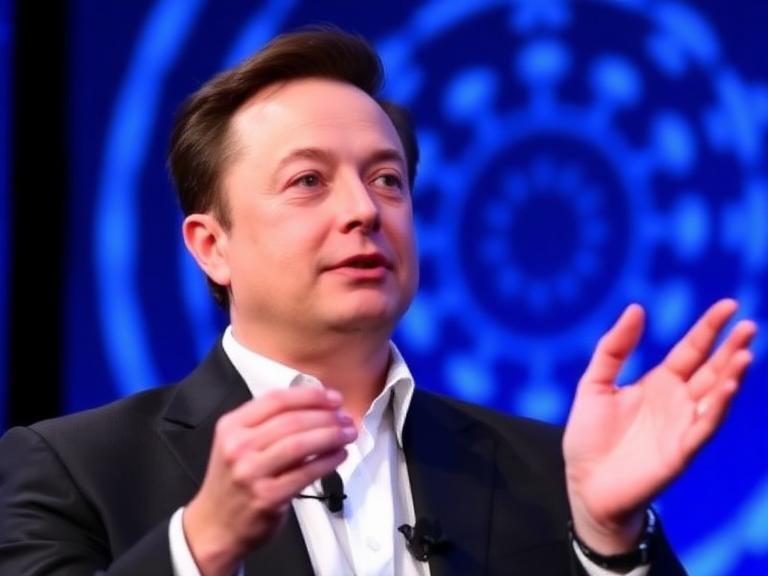
Elon Musk is known for making disruptive predictions—whether about Mars travel, self-driving cars, or the future of robotics. But his latest statement during a conversation with Zerodha co-founder Nikhil Kamath has triggered one of the most intense debates of the decade: “AI will make jobs optional.”
This prediction is not just a technological forecast but a philosophical challenge to humanity’s existing structures—economy, identity, purpose, and lifestyle. According to Musk, artificial intelligence will soon become so advanced, so capable, and so integrated into everyday life that humans will no longer need to work to survive. Instead, work will shift from being a means of survival to being a personal choice.
1. What Elon Musk Means by “Jobs Will Become Optional”
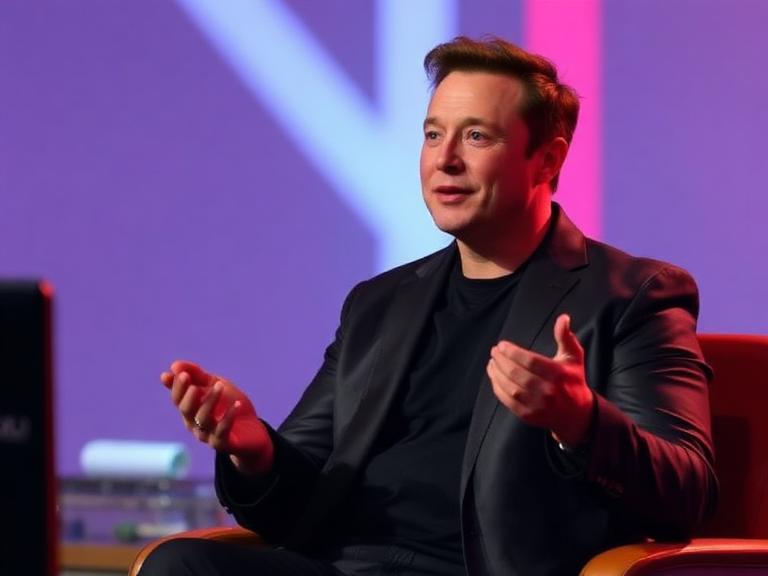
Shifting Work From Necessity to Preference
Musk’s argument is simple yet radical:
AI will be able to do almost every job—physical, mental, creative, managerial—better and faster than humans. In such a world, people won’t work because they have to, but because they want to.
Work will become similar to hobbies today:
- Something you do out of passion
- Something you choose to engage in
- Something you pursue for meaning or identity
AI and robotics will handle the rest.
“There Will Be No Job That AI Cannot Do”
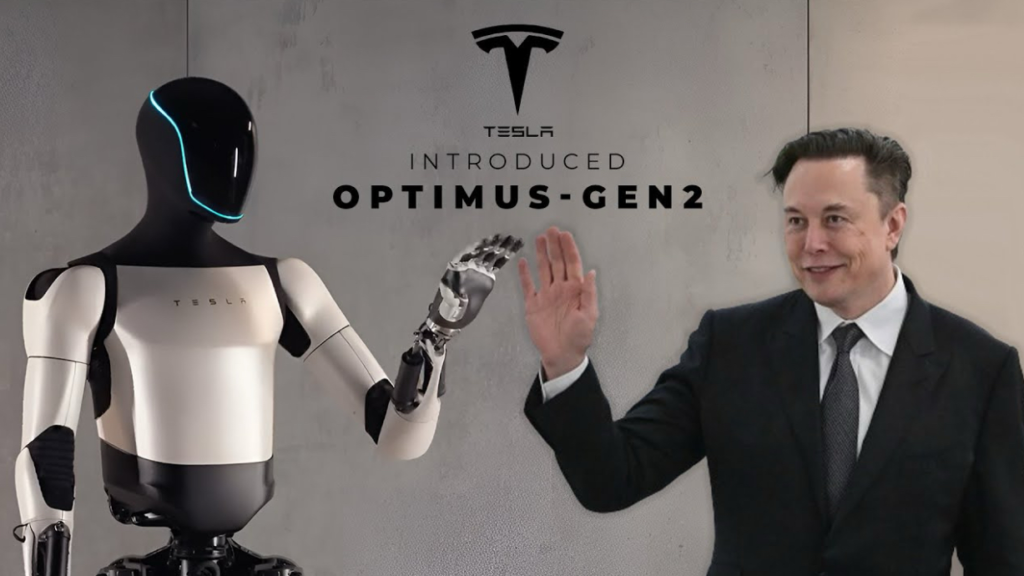
During the talk, Musk emphasized that AI’s capabilities are growing exponentially. From coding to medical diagnosis to performing complex simulations, AI is already surpassing human skill in multiple areas. When paired with advanced robotics—like Tesla’s Optimus—AI will also take over manual labor.
Thus, “optional work” is not hyperbole. Musk is painting a realistic trajectory of technology in the next 10–20 years.
2. Why Musk Believes AI Will Replace All Forms of Work
Superhuman Intelligence as the Key Driver
Artificial intelligence systems are developing:
- Faster learning speeds
- Massive data understanding
- Predictive accuracy
- Continuous improvement without fatigue
AI models process in seconds what takes humans weeks or months. This advantage compounds over time.
Robotics Makes Physical Jobs Obsolete
AI alone can’t replace construction workers or delivery staff—but robotics can.
Humanoid robots are:
- Becoming more dexterous
- Learning through reinforcement
- Becoming cheaper to produce
- Designed to perform human-like tasks
Musk predicts millions of humanoid robots performing jobs humans currently do.
Automation Is Already Replacing Jobs
Even today, the following roles are being automated:
- Customer service
- Transportation
- Manufacturing
- Finance and market analysis
- Healthcare imaging
- Farming and food production
- Warehousing and logistics
The speed of replacement is accelerating.
3. Key Takeaways From Musk’s Conversation With Nikhil Kamath
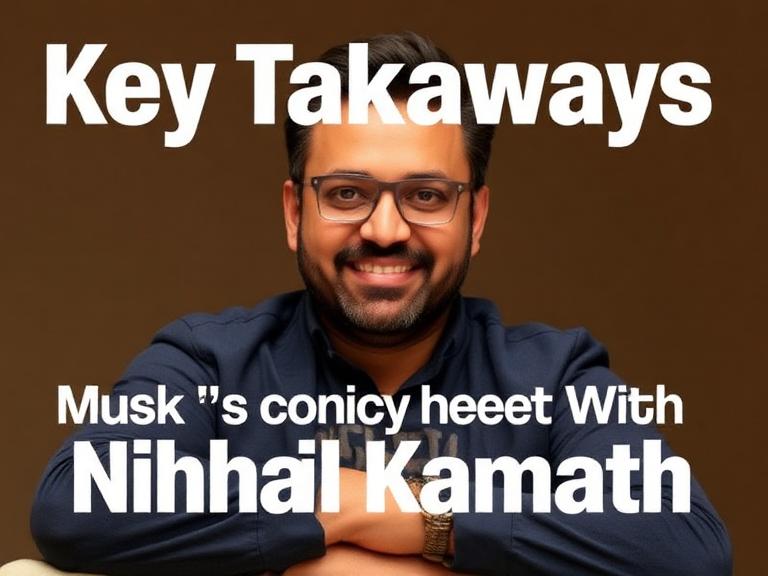
AI’s Power Will Reshape Civilization
One of the biggest takeaways is Musk’s belief that AI is not just a tool—it is a civilization-altering force.
He explained that the rise of AI will transform:
- The global job market
- The structure of economies
- Human daily life
- Education
- Social meaning
- Political systems
Kamath’s Questions on Purpose and Identity
Kamath asked an important question: If jobs become optional, what will give humans purpose?
Musk believes humans will find meaning through:
- Creativity
- Relationships
- Exploration
- Innovation
- Art
- Philanthropy
- Curiosity
Work, as we know it, will no longer define self-worth.
AI Will Do “Everything Better Than Humans”
Musk didn’t hold back. He stated clearly that AI will outperform humans in:
- Problem-solving
- Creativity
- Strategy
- Logic
- Technical execution
- Design
- Communication
- Coding
- Medicine
This is why he believes the era of human labor is reaching its natural end.
4. The Concept of “Universal High Income” (UHI)
Beyond Universal Basic Income (UBI)
Musk introduced a broader concept:
UHI — Universal High Income
Unlike UBI (a basic survival stipend), UHI ensures a comfortable, high-quality life.
Why UHI Will Be Necessary
If AI and robots generate enormous wealth, then societies must:
- Redistribute earnings
- Prevent wealth gaps
- Ensure stability
- Reward humans even without jobs
Without this, automation will create dangerous inequality.
Funding UHI Through AI Taxes
Potential funding sources include:
- “Robot taxes”
- AI productivity taxes
- Automation revenue-sharing
- Corporate contribution models
Musk believes this is not optional—it will be mandatory for survival of social order.
5. Superintelligence: The Biggest Shift in Human History
AI Beyond Human Comprehension
Musk has long warned about superintelligence—AI that surpasses human intelligence across all domains.
Superintelligence is:
- Non-biological
- Immortal
- Scalable
- Hyper-analytical
- Free from emotional bias
- Capable of self-improvement
How Superintelligence Makes Human Work Obsolete
A superintelligent system could:
- Write perfect code
- Design entire companies
- Manage global supply chains
- Develop medicines
- Create new technologies
- Predict economic trends
- Solve scientific mysteries
Humans can’t compete with such scale and speed.
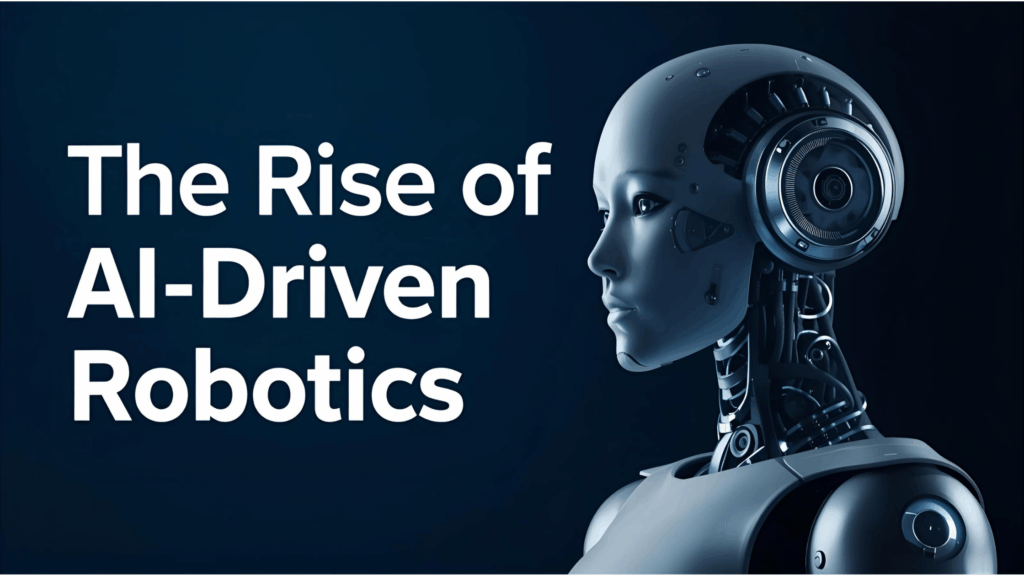
6. The Rise of AI-Driven Robotics
Tesla Optimus and the Future Workforce
Tesla’s Optimus robot is an early prototype for what Musk believes will become a universal worker. It will:
- Cook
- Clean
- Build
- Repair
- Move heavy objects
- Assist in homes and factories
Optimizing robots with AI means physical labor is fully automatable.
Industries Most Affected
Robots will dominate:
- Manufacturing
- Farming
- Construction
- Warehousing
- Defense
- Hospitality
- Transportation
Robotics is the bridge between AI’s intelligence and real-world execution.
7. Societal and Ethical Implications of Optional Work

What Happens to Human Purpose?
Human identity is deeply linked to work. Without it, societies must redefine:
- Self-worth
- Achievement
- Productivity
- Lifestyle
- Community roles
Avoiding Economic Collapse
If people lose income too quickly:
- Markets destabilize
- Social unrest increases
- Politics becomes volatile
Thus, the shift must be gradual and supported by strong policies.
The Risk of AI-Owned Power
If a few companies control advanced AI:
- Monopoly rises
- Political influence skyrockets
- Wealth concentrates
- Nations lose control
Musk advocates for open, safe, and democratic AI development.
8. The Future of Education in an AI-Dominated World
Traditional Education Becomes Outdated
Memorizing facts becomes unnecessary when AI can:
- Explain anything
- Solve anything
- Teach any subject
- Generate personalized curricula
Future Skills That Matter Most
Humans will focus on:
- Creativity
- Critical thinking
- Empathy
- Storytelling
- Philosophy
- Ethics
- Innovation thinking
Education will shift from “job preparation” to “personal development.”
9. Humans in the Era of Optional Jobs
Returning to Creativity and Exploration
Humans may spend more time on:
- Arts and music
- Writing and filmmaking
- Spiritual exploration
- Invention and experimentation
- Space travel
- Community building
- Learning and curiosity
The Mental Health Challenge
Without structure, humans may face:
- Boredom
- Anxiety
- Loss of identity
- Aimlessness
Society will need strong support systems.
10. Redesigning Global Economies
Traditional Capitalism Will Transform
When machines do all the work, the economy can no longer rely on:
- Labor
- Salaries
- Employment-based taxation
New systems will emerge.
AI-Driven Productivity Will Explode
AI will boost productivity in:
- Factories
- R&D
- Energy
- Transportation
- Healthcare
- Finance
- Construction
This wealth must be redistributed fairly.
11. What Industries Will Survive?
Even with AI dominance, some sectors will remain human-driven:
Creative Arts
Humans will always appreciate human expression.
Therapy and Emotional Support
AI lacks true empathy.
Cultural Leadership
Humans will lead communities.
High-Level Strategy
Some leadership decisions require human intuition.
Handcrafted and Luxury Goods
Human-made items retain emotional value.
Scientific Frontiers
AI assists, but bold ideas often come from human curiosity.
12. The Transition Stage: What To Expect in the Next 10–20 Years
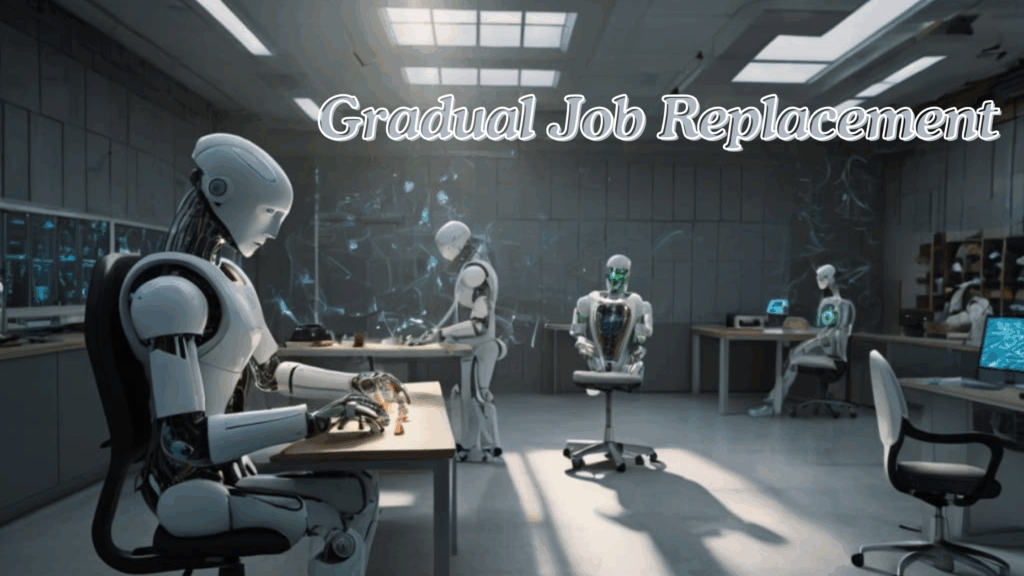
Gradual Job Replacement
Repetitive jobs vanish first.
Hybrid Work Environments
Humans + AI collaboration.
New Professions Emerge
AI ethicists, robot psychologists, human-AI coordinators.
Demand for Creative Work Grows
Because creativity cannot be automated fully.
13. What Governments Must Do to Prepare

Rewrite Policies
Labor laws, tax systems, and economic models will need reform.
Invest in Public AI
To prevent corporate monopolies.
Support Upskilling and Creativity Education
The new world requires new talents.
Implement UHI Slowly
To ensure smooth transition.
14. Arguments Supporting Musk’s Prediction

History of Technological Disruption
Every revolution—from the steam engine to the internet—reduced human labor needs.
Current AI Trends
AI already performs:
- Legal research
- Coding
- Medical analysis
- Art creation
- Decision-making
Robotics Advancements
Robots are becoming cheaper and smarter fast.
Economic Incentives
Companies love automation because:
- It’s cheaper
- It’s faster
- It doesn’t get sick
- It doesn’t need breaks