





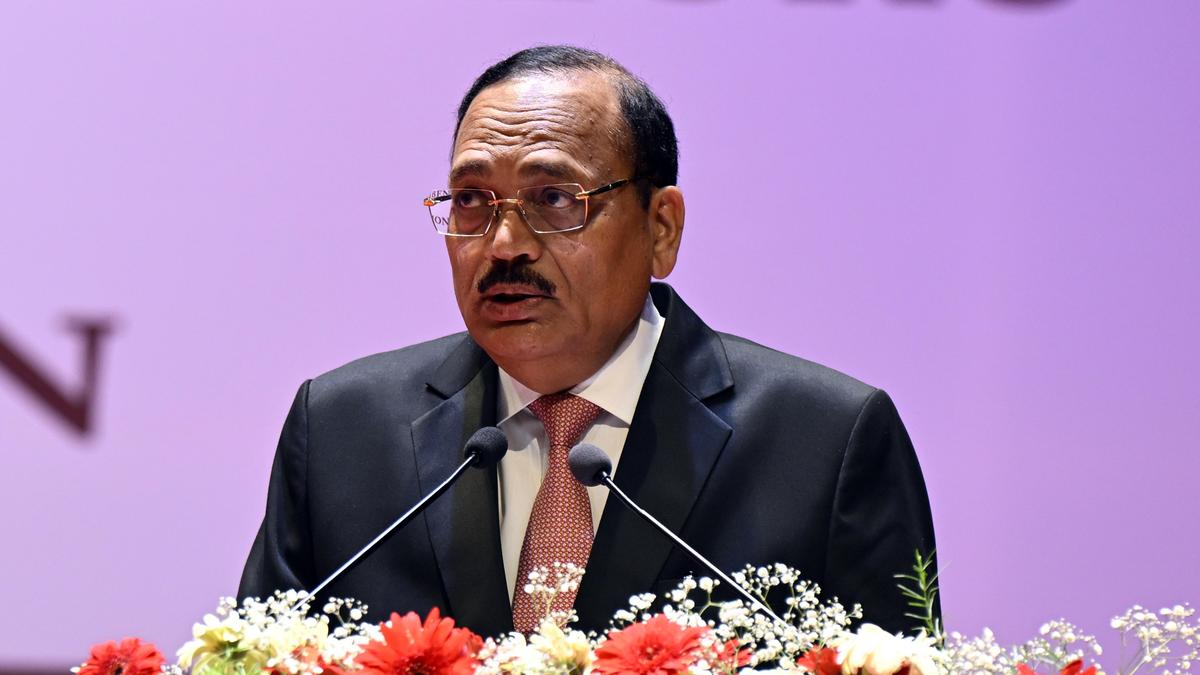
Justice Surya Kant’s swearing-in as the 53rd Chief Justice of India (CJI) marks a historic moment in the country’s judicial system. Known for his humility, sharp legal reasoning, and reform-oriented thinking, Justice Surya Kant has carved a legal journey that stands out for its depth, diversity, and integrity. From serving as the youngest Advocate General of Haryana to holding top positions such as Chief Justice of the Himachal Pradesh High Court and a judge of the Supreme Court, his rise symbolizes merit, commitment, and the strength of India’s constitutional framework.
1. Early Life and Educational Foundation
Justice Surya Kant was born on 10 February 1962 in Pundri, Haryana, to a simple and grounded family. Growing up in a rural environment shaped his understanding of social realities, governance challenges, and the need for accessible justice.
Academic Background
- Completed graduation (B.A.) from Government College, Pundri.
- Pursued LL.B. from Maharshi Dayanand University, Rohtak.
- Actively participated in debates, youth leadership programs, and legal discussions.
His strong educational foundation and deep exposure to public issues at a young age laid the base for his future career in the judiciary.
2. Entry into the Legal Profession
Justice Surya Kant began his legal practice in the Punjab and Haryana High Court. From the start, he was known for:
- Strong command over constitutional law
- Clear and persuasive arguments
- Discipline and ethics
- Balanced understanding of public administration
Key Early Career Highlights
- Represented clients in constitutional, service, criminal, and administrative matters.
- Earned a reputation for fairness and principled advocacy.
- Became a respected name among senior advocates and judicial officers.
This early phase of his career built the credibility that later propelled him into key legal positions.
3. Youngest Advocate General of Haryana – A Historic Milestone
In 2000, at the age of just 38, Surya Kant achieved a historic feat by becoming the youngest Advocate General (AG) of Haryana.
Responsibilities as the State’s Highest Law Officer
- Represented the Government of Haryana before the High Court and Supreme Court.
- Provided legal advice on government decisions, policies, and administrative matters.
- Shaped legal strategies during complex governance challenges.
- Helped strengthen the culture of responsible litigation.
His tenure as AG stood out for its clarity in legal reasoning, strong ethics, and a commitment to protecting public interest.
4. Elevation as a Judge of the Punjab & Haryana High Court
Justice Surya Kant was elevated as a Judge of the Punjab and Haryana High Court on 9 January 2004. This marked his formal entry into India’s judicial leadership.
Judicial Contributions During This Phase
- Delivered landmark judgments on constitutional governance, service disputes, and human rights.
- Championed judicial independence, transparency, and accountability.
- Consistently promoted social justice, equality, and public welfare.
His balanced and empathetic judgments gained appreciation from the legal community.
5. Chief Justice of the Himachal Pradesh High Court
He took over as the Chief Justice of the Himachal Pradesh High Court in October 2018. This role expanded his responsibilities from purely judicial work to administrative and institutional leadership.
Reform-Centric Leadership
- Introduced efficient case management systems.
- Strengthened alternative dispute resolution (ADR) mechanisms.
- Encouraged digital filing and video-conferencing, especially crucial in a hilly State.
- Ensured timely hearings even in remote districts.
Justice Surya Kant’s administrative vision reflected a modern, accessible, and citizen-centric justice system.
6. Elevation to the Supreme Court of India
Justice Surya Kant was elevated to the Supreme Court of India on 24 May 2019. Over the years, he has delivered key judgments across various branches of law.
Important Judicial Domains He Contributed To
- Constitutional interpretation
- Administrative and service law
- Criminal justice
- Environmental protection
- Human rights and liberties
His Supreme Court judgments exhibit clarity, depth, and compassion—qualities widely valued in judicial leadership.
7. Landmark Cases Associated With Justice Surya Kant
Over his judicial career, Justice Surya Kant has been part of various important cases. Some key themes include:
a. Constitutional Morality and Liberty
His judgments have reaffirmed constitutional supremacy and the need to safeguard fundamental freedoms.
b. Environmental Governance
He has consistently supported responsible development, ecological balance, and stricter compliance on environmental laws.
c. Accountability in Governance
Justice Surya Kant is known for promoting transparency, fairness, and adherence to legal principles in public administration.
d. Social Justice
His rulings often address the concerns of weaker sections, emphasizing inclusive justice.
These contributions significantly shaped contemporary Indian jurisprudence.
8. Sworn in as the 53rd Chief Justice of India – A Defining Moment
Justice Surya Kant officially took oath as the 53rd Chief Justice of India in a prestigious ceremony at Rashtrapati Bhavan.
Significance of This Appointment
- Symbolizes a remarkable rise from a village in Haryana to India’s highest judicial office.
- Highlights merit-driven progress in the Indian legal system.
- Reflects his decades-long commitment to justice and constitutional governance.
His appointment is seen as a promising development for judicial reforms and modernization.
9. Role and Responsibilities as Chief Justice of India
As CJI, Justice Surya Kant now holds multiple critical responsibilities that influence the nation’s legal framework.
a. Administrative Head of the Supreme Court
He oversees case allocation, bench formation, judicial schedules, and court administration.
b. Chief of the Collegium System
As head of the judicial appointments body, he plays a decisive role in:
- Appointments of judges
- Transfers across High Courts
- Reforms in the selection process
c. Guardian of the Constitution
He is entrusted with protecting fundamental rights, ensuring fairness, and maintaining constitutional balance.
d. Leadership of the Judiciary Nationwide
He influences judicial functioning across all High Courts and subordinate courts.
10. Judicial Philosophy: Balancing Reform and Stability
Justice Surya Kant’s judicial philosophy reflects three key themes:
a. Accessibility
He strongly advocates for a justice system that is easy to approach, affordable, and understandable.
b. Modernization
Supports digital courts, e-filing, hybrid hearings, and tech-enabled justice processes.
c. Social Responsibility
Believes that the judiciary must remain sensitive to marginalized communities and socio-economic realities.
His philosophy shapes expectations for his tenure as CJI.
11. Expected Reforms During His Tenure
Legal experts and observers believe that Justice Surya Kant may introduce several impactful reforms:
1. Strengthening Digital Infrastructure
- Wider use of e-courts
- AI-enabled legal processes
- Digital case tracking
- Hybrid hearing systems
2. Fast-Tracking Pending Cases
India faces massive pendency; reforms may include:
- Streamlined case management
- Better coordination with High Courts
- Encouraging mediation and ADR
3. Transparency in Judicial Appointments
He may push for:
- More structured criteria for appointments
- Clearer communication on collegium decisions
4. Training and Capacity Building
Judicial officers may receive:
- Digital literacy training
- Behavioral and legal workshops
- Updated training programs for the 21st century
5. Public-Centric Justice
He is expected to promote:
- Legal aid services
- Simplified court procedures
- Timely hearings for vulnerable groups
These reforms align with his long-standing belief in modern, accessible courts.
12. Relationship With the Bar and Litigants
Justice Surya Kant has always maintained cordial, professional, and respectful relations with the Bar.
Why He Is Respected Among Lawyers
- Polite courtroom behavior
- Fairness in hearing all sides
- Clear and structured judgment writing
- Encouragement of young lawyers
His ability to balance firmness with empathy is valued by litigants and advocates alike.
13. Challenges Before Him as the Chief Justice of India
As CJI, he faces several critical challenges:
a. Huge Pendency of Court Cases
More than 5 crore court cases are still waiting to be resolved across India. Strategic reforms are essential.
b. Infrastructure Gaps in Lower Courts
Many subordinate courts lack basic facilities, digital access, and sufficient staff.
c. Judiciary–Executive Balance
Maintaining constitutional boundaries while ensuring cooperation is an ongoing challenge.
d. Collegium System Controversies
Debates on transparency and judicial appointments continue nationwide.
e. Rising Public Expectations
The public increasingly wants faster, more transparent, and more responsive justice.
Justice Surya Kant’s leadership will shape how these challenges are addressed.
14. Legacy and Qualities That Define Him
Justice Surya Kant’s career is built on several admirable virtues:
a. Integrity
He is known for honesty, impartiality, and ethical decision-making.
b. Hard Work
His rise from a small town to CJI exemplifies discipline and dedication.
c. Empathy
His judgments reflect sensitivity toward common citizens and vulnerable groups.
d. Administrative Skill
He has modernized judicial systems in every role he has held.
e. Vision
He consistently promotes accessible, technology-driven, and people-friendly justice.
These qualities form a strong foundation for his tenure as CJI.
15. Public, Legal Community, and Institutional Response
Justice Surya Kant’s elevation has been widely appreciated:
Reactions
- Bar associations welcomed his appointment with optimism.
- Legal scholars praised his reform-oriented thinking.
- Young lawyers view him as an inspiring role model.
- Judiciary observers expect administrative upgrades under his leadership.
His credibility and extensive judicial experience inspire confidence in the future of the Indian judicial system.