




India’s credit card ecosystem witnessed a strong revival during FY26, driven by festive consumption, improving consumer confidence, and the positive impact of GST rationalisation, commonly referred to as GST 2.0. According to the latest data released by the Reserve Bank of India (RBI), credit card spending rose 13.57 per cent year-on-year (Y-o-Y) during the April–December period of FY26, underlining the resilience of urban consumption and the increasing preference for digital payments.
This surge in credit card spending in FY26 reflects a broader structural shift in how Indian consumers finance discretionary and essential purchases. With inflation stabilising, festival demand returning to pre-pandemic levels, and banks refining their card issuance strategies, the credit card segment has entered a phase of sustainable growth.
1. Overview of Credit Card Spending Growth in FY26

The RBI data shows that total credit card spending during the April–December period of FY26 recorded a 13.57 per cent Y-o-Y increase, marking one of the strongest growth phases in recent years. This growth comes after a relatively cautious FY25, when banks slowed card issuances amid concerns around asset quality and rising delinquencies.
Unlike earlier years where growth was largely driven by aggressive customer acquisition, credit card spending in FY26 has been supported by higher transaction values, better card activation, and disciplined lending practices.
Key highlights include:
- Sustained momentum after October due to festive demand
- Improved transaction volumes across both PoS and e-commerce
- Stabilisation of asset quality prompting banks to refocus on growth
2. December 2025 Spending Rebound Signals Strong Finish
December 2025 proved to be a crucial month for the credit card industry. After a relatively muted November, spending rebounded sharply, rising 9.04 per cent Y-o-Y to ₹2.05 trillion, compared to ₹1.89 trillion in December 2024.
This rebound highlights the importance of year-end consumption, driven by:
- Wedding season expenses
- Holiday travel and tourism
- Year-end retail discounts
- Festive shopping spillover from Diwali and Christmas
Notably, December became the fourth month in calendar year 2025 when monthly credit card spending crossed the ₹2 trillion mark, reinforcing the idea that high-value card transactions are becoming the norm rather than an exception.
3. Seasonal Consumption and Festival Demand as Key Drivers

One of the strongest contributors to rising credit card spending in FY26 has been the revival of seasonal and festival-led consumption. India’s festive calendar, spanning from October to December, traditionally accounts for a significant portion of annual discretionary spending.
In FY26:
- Consumers showed higher willingness to spend on electronics, apparel, jewellery, and travel
- Retailers offered extended EMI schemes and cashback incentives
- E-commerce platforms ran long festive sale campaigns
These factors collectively boosted both transaction volumes and average ticket sizes, helping credit card spending grow faster than overall consumption.
4. GST 2.0 and Its Impact on Credit Card Usage
The rationalisation of the Goods and Services Tax framework, often referred to as GST 2.0, played a subtle but impactful role in boosting credit card spending during FY26.
GST relaxation and clarity in tax structures:
- Reduced uncertainty for businesses and consumers
- Encouraged formal, invoice-based transactions
- Made card payments more attractive for mid-value and high-value purchases
According to Saurabh Bhalerao, Associate Director at CareEdge Ratings, GST relaxation contributed to improved spending momentum after October, complementing festival demand and improving overall transaction growth.
5. Credit Card Base Expands Steadily

Another important indicator of sector health is the steady expansion of the credit card user base. As of December 2025, the total number of outstanding credit cards in India stood at 115.78 million, reflecting a 7.14 per cent Y-o-Y increase.
Comparative figures show:
- December 2024: 108.06 million cards
- November 2025: 114.87 million cards
- December 2025: 115.78 million cards
This growth suggests that while banks remain selective, new customer additions continue, particularly in salaried and self-employed segments with stable income profiles.
6. Banks Shift Strategy from Volume to Quality
Unlike previous expansion cycles, banks in FY26 have adopted a calibrated growth strategy. After undergoing a clean-up phase last year, lenders are now prioritising:
- High-value customers
- Low-default risk profiles
- Better credit behaviour and repayment history
As noted by industry experts, banks have moved away from aggressive card issuance to sub-prime segments. Instead, they are focusing on quality growth, which supports sustainable increases in credit card spending in FY26 without compromising asset quality.
7. Quarterly Performance: October–December FY267.
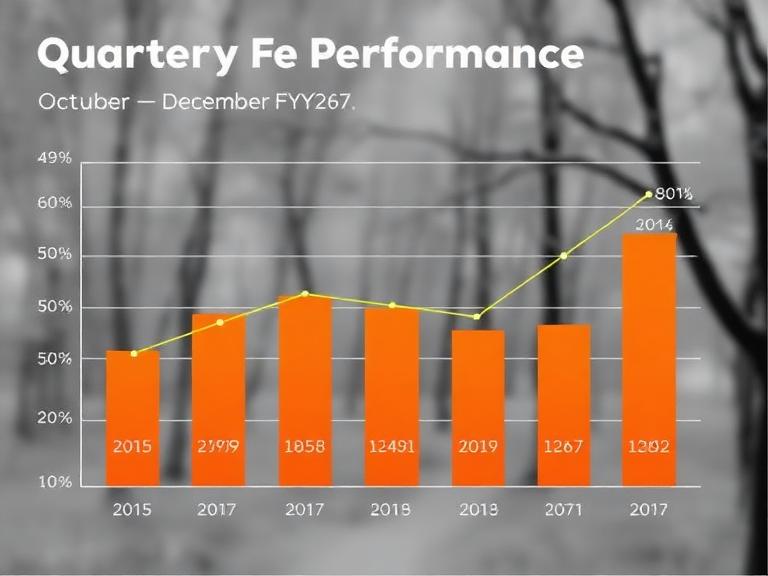
The October–December quarter of FY26 delivered solid performance, with total credit card spending rising 8.76 per cent Y-o-Y to ₹6.08 trillion, compared to ₹5.59 trillion in the same quarter last year.
This quarter benefited from:
- Festive shopping
- Higher travel and hospitality spending
- Increased online and offline retail transactions
While the growth rate was slightly lower than the full April–December period, it reflects a more stable and mature consumption cycle, rather than one driven by short-term spikes.
8. Calendar Year Performance Shows Strong Momentum
On a calendar year basis, credit card spending between January and December 2025 increased 13.96 per cent Y-o-Y to ₹23.18 trillion. This figure highlights the expanding role of credit cards in India’s payment ecosystem.
The data suggests that credit cards are no longer limited to luxury or discretionary spending. They are increasingly used for:
- Utility payments
- Education fees
- Healthcare expenses
- Travel bookings
This broadening usage base strengthens the long-term outlook for credit card spending in FY26 and beyond.
9. PoS Transactions Maintain Healthy Growth

Point-of-sale (PoS) transactions continued to grow steadily during FY26, reflecting strong offline consumption. During the April–December period, PoS transactions rose 12.01 per cent Y-o-Y to ₹6.63 trillion.
In December alone:
- PoS spending increased 7.43 per cent Y-o-Y
- Transaction value reached ₹78,476.48 crore
This growth indicates that physical retail continues to coexist strongly with digital commerce, especially during festivals and high-footfall seasons.
10. E-Commerce Transactions Outpace Offline Growth
E-commerce remained the fastest-growing segment within credit card spending. During the April–December FY26 period, online transactions rose 14.38 per cent Y-o-Y to ₹11.03 trillion.
December 2025 saw:
- E-commerce credit card spending of ₹1.26 trillion
- A 9.8 per cent Y-o-Y increase
The dominance of e-commerce reflects changing consumer behaviour, where credit cards are preferred for:
- Instant discounts
- No-cost EMI options
- Subscription payments
- Cross-border purchases
11. Performance of Major Credit Card Issuers
HDFC Bank
HDFC Bank continued to dominate the market as India’s largest credit card issuer. In December 2025, its card spending reached ₹57,235.50 crore, up from ₹53,165.32 crore a year earlier.
The bank’s strong performance is driven by:
- Premium card offerings
- Wide merchant acceptance
- High customer loyalty
SBI Cards
SBI Cards recorded the sharpest growth among major players, with spending surging 41.4 per cent Y-o-Y to ₹39,892.85 crore. This growth reflects improved activation rates and expanding usage among salaried customers.
ICICI Bank
ICICI Bank posted a 5.3 per cent Y-o-Y increase, with card spending reaching ₹36,871.46 crore in December. The bank continues to focus on digital onboarding and lifestyle-focused card products.
Axis Bank
Axis Bank reported a 7.13 per cent Y-o-Y increase in spending, reaching ₹23,181.72 crore, supported by partnerships, co-branded cards, and premium offerings.
12. Credit Card Issuance Leadership
As of December 2025, HDFC Bank led card issuances with 25.79 million cards in circulation. Other major players included:
- SBI Card: 21.81 million cards
- ICICI Bank: 18.65 million cards
- Axis Bank: 15.65 million cards
These figures highlight a competitive but consolidated market, where a few large issuers dominate while smaller banks focus on niche segments.
13. Asset Quality Stabilisation Supports Growth

One of the key reasons behind renewed confidence in the credit card segment is the stabilisation of asset quality. After tightening underwriting standards in FY25, banks are now seeing:
- Lower delinquency trends
- Improved repayment behaviour
- Better risk-adjusted returns
This stabilisation allows lenders to focus on fee income growth, higher card usage, and value-added services rather than merely expanding card numbers.
14. Outlook for Credit Card Spending in FY26
According to analysts at IDBI Capital, credit card spending momentum is expected to remain steady in the coming months, supported by:
- Residual festive demand
- Stable urban consumption
- Improving employment outlook
While year-on-year growth rates may moderate slightly, underlying demand remains intact, driven by rising volumes and sustained card additions.
15. Long-Term Outlook: Sustainable and Disciplined Growth

Looking ahead, banks are likely to prioritise:
- Higher card activation rates
- Increased average spend per card
- Expansion of fee-based income
- Selective customer acquisition
Rather than chasing aggressive growth, lenders are focusing on building a resilient and profitable credit card ecosystem, ensuring that credit card spending in FY26 marks the beginning of a stable long-term trend.
According to data released by the Reserve Bank of India (RBI), credit card spending in FY26 saw strong year-on-year growth, supported by festive demand and GST rationalisation. Industry experts from CareEdge Ratings and analysts at IDBI Capital noted that improving asset quality and steady consumption trends are likely to sustain momentum in the credit card segment going forward.
India’s IT industry continues to navigate a challenging growth environment, with slowdowns in demand and mixed signals on hiring and workforce restructuring. As highlighted in our analysis of India IT Growth Slowdown: Dividend & Job Cut Updates