





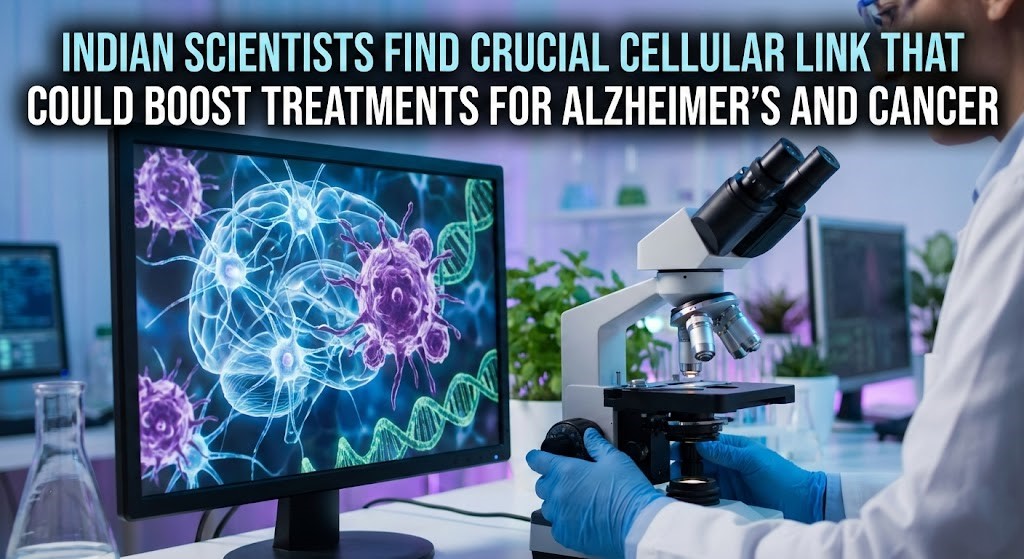
Indian scientists have achieved a major breakthrough in understanding how human cells maintain internal balance through a cellular missing link and how disruptions in this system contribute to serious diseases such as Alzheimer’s and cancer. The discovery reveals a previously unknown cellular mechanism that plays a central role in autophagy, the body’s natural process of cleaning and recycling damaged cellular components.
This finding is being described as a cellular missing link because it fills a long-standing gap in scientific knowledge and explains how cells regulate autophagy at a critical control point. By identifying how cells regulate their internal cleanup machinery, researchers have opened new possibilities for targeted and more effective disease therapies.
Understanding Autophagy: The Cell’s Natural Cleanup System

Autophagy is a vital biological process that allows cells to remove damaged proteins, worn-out organelles, and toxic waste through a carefully regulated cellular missing link. Every cell generates waste during normal functioning, and without this internal disposal system, harmful materials can accumulate, disrupt cellular health, and increase the risk of disease.
Through autophagy, cells isolate unwanted material inside specialized structures and recycle the components for reuse. This process supports cell survival, energy balance, immune function, and long-term cellular stability.
When autophagy works efficiently, cells remain healthy. When it fails, disease often follows.
Why Autophagy Failure Triggers Disease
Defective autophagy has been linked to a wide range of chronic and age-related disorders, often due to a breakdown in the cellular missing link that controls internal cleanup. When cells lose their ability to clear internal waste, harmful proteins and damaged structures begin to accumulate, triggering cellular stress and disease progression.
This buildup can lead to:
- Chronic inflammation
- Genetic instability
- Cellular stress
- Premature cell death
Such conditions form the biological foundation for neurodegenerative diseases and cancer, making autophagy regulation a critical target for medical research.
The Newly Identified Cellular Missing Link
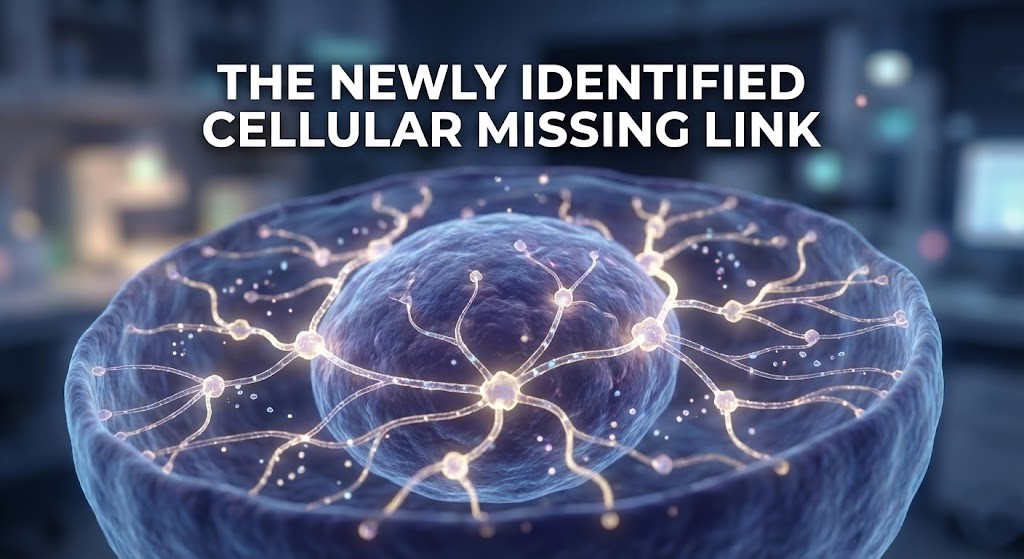
The Indian research team discovered that a protein complex, once thought to function mainly in cellular transport, represents a crucial cellular missing link essential for initiating autophagy. This complex plays a key role in forming autophagosomes—the specialized structures that enclose and isolate cellular waste for safe recycling.
Autophagosomes act like sealed containers that safely transport damaged material for recycling. Without proper formation of these structures, autophagy cannot proceed effectively.
The researchers found that when this protein complex is disrupted:
- Autophagosomes fail to form correctly
- Waste accumulates inside the cell
- Cellular stress increases
- Disease-related pathways are activated
This discovery clarifies a critical step in autophagy that had remained unclear for years.
Importance of the Discovery for Alzheimer’s Disease
Alzheimer’s disease is marked by the accumulation of toxic protein aggregates in brain cells, often linked to dysfunction in the cellular missing link responsible for cellular cleanup. These harmful proteins interfere with communication between neurons and eventually lead to irreversible brain damage.
Neurons depend heavily on efficient autophagy because they:
- Do not regenerate easily
- Must function for a lifetime
- Are highly sensitive to waste accumulation
The newly discovered autophagy mechanism helps explain why neurons fail to clear toxic material in Alzheimer’s disease. Targeting this cellular pathway could restore the cleanup process, reduce protein buildup, and slow disease progression.
Understanding the Link to Cancer Progression

Autophagy plays a complex role in cancer. In healthy cells, it prevents cancer by removing damaged components. However, once cancer develops, tumor cells often exploit autophagy to survive under harsh conditions such as low oxygen or chemotherapy exposure.
The discovery allows scientists to move beyond broad autophagy suppression or activation. Instead, therapies can be designed to precisely disrupt autophagy in cancer cells while preserving it in healthy tissue.
Potential benefits include:
- Improved chemotherapy effectiveness
- Reduced tumor survival
- Lower drug resistance
- More targeted cancer treatments
How the Breakthrough Was Achieved
Researchers used advanced molecular biology techniques and model organisms that share essential cellular processes with humans. This approach allowed them to observe autophagy in detail and identify the exact molecular players involved.
The study demonstrated that autophagy depends on coordinated action between multiple proteins rather than a single regulatory switch. This insight reshapes how scientists understand cellular self-cleaning mechanisms.
Implications for Future Drug Development

The discovery has major implications for pharmaceutical research. Drug developers can now target specific molecular steps in autophagy regulation rather than influencing the entire process indiscriminately.
This precision could lead to:
- Safer medications
- Reduced side effects
- Disease-specific treatments
- Better long-term patient outcomes
Role in Personalized and Precision Medicine
Because autophagy behaves differently across diseases and individuals, this discovery supports the development of personalized therapies. Measuring how this cellular pathway functions in individual patients could guide treatment selection and dosing.
Such an approach could improve treatment success in both neurodegenerative disorders and cancer.
Broader Impact on Aging and Chronic Diseases
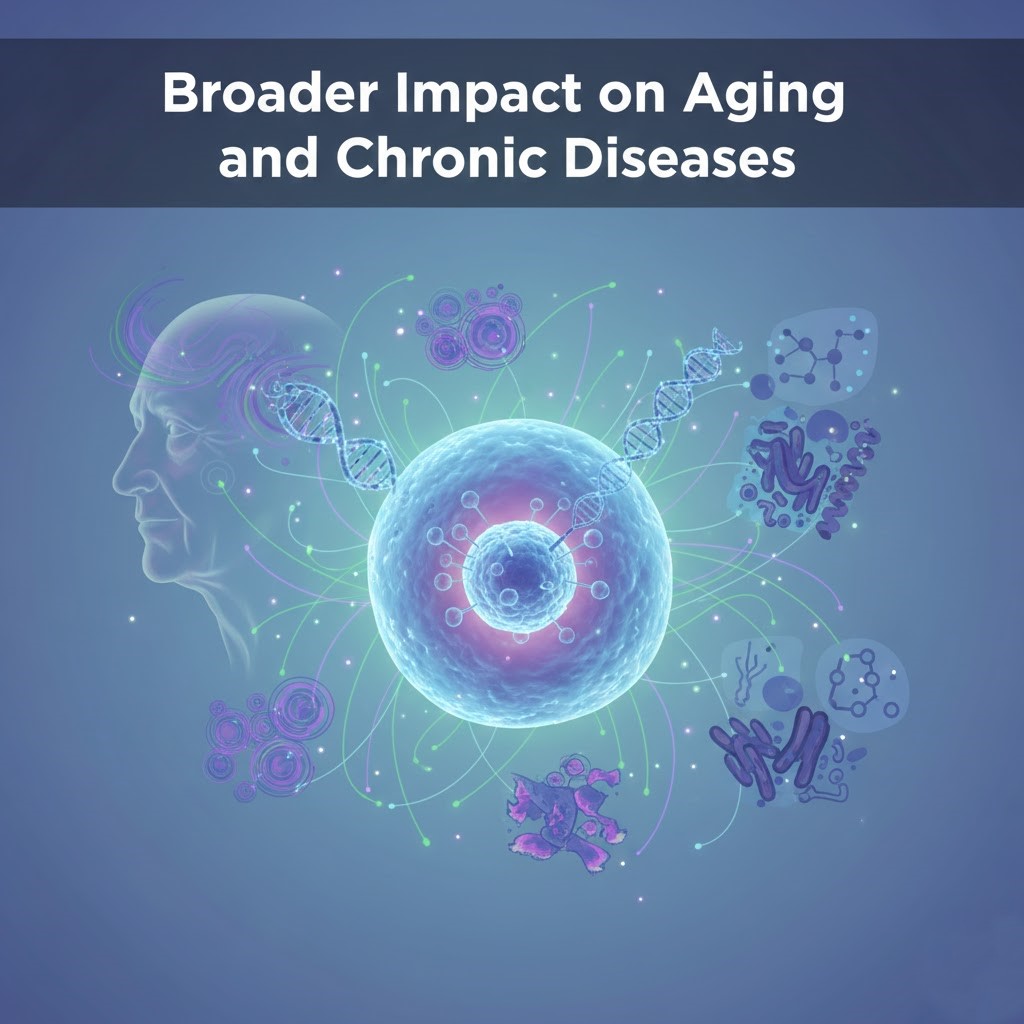
Autophagy naturally declines with age, contributing to cellular aging and increased disease risk. Understanding how this process is regulated opens new avenues for healthy aging research.
Enhancing cellular cleanup could delay age-related decline and improve overall healthspan.
India’s Growing Contribution to Global Biomedical Science
This discovery highlights India’s rising influence in advanced biomedical research. By focusing on fundamental cellular mechanisms, Indian scientists are contributing knowledge with global relevance and long-term medical impact.
Such research strengthens international collaboration and positions India as a key player in future therapeutic innovation.
Challenges Before Clinical Application

While the discovery is promising, several steps remain before it can be translated into medical treatments:
- Validation in human cell systems
- Testing in disease models
- Development of safe drug candidates
- Clinical trials to confirm effectiveness
Despite these challenges, the discovery provides a strong foundation for future breakthroughs.
Indian scientists at JNCASR have discovered that the exocyst complex plays a key role in autophagy, the cellular “self-cleaning” process, which could help develop better treatments for Alzheimer’s and cancer. Indian Scientists Find Missing Link in Cells to Boost Therapies for Alzheimer’s and Cancer
Read more about the Samsung Galaxy S26 Plus specs here Samsung Galaxy S26 Plus Price in India, Launch, Specs — Skinnyzine