




Everyone knows that a healthy pregnancy diet matters — but what if prenatal exposure to high-fat foods alone could influence a child’s weight and metabolism later in life? Recent scientific research suggests that such exposure, including the aromas of high-fat or junk foods during pregnancy, may predispose children to weight gain and obesity as they grow.
This discovery is reshaping how experts think about early metabolic health and the origins of childhood obesity. Traditionally, the focus was on what a pregnant woman eats, but now prenatal exposure to high-fat foods is being recognized as an environmental factor that can influence fetal brain development and metabolic programming even before birth.
In this article, we explore the study’s findings, how prenatal exposure to high-fat foods impacts fetal development, implications for human health, expert opinions, and practical steps mothers can take to promote healthier outcomes for their children.
What Did the Study Discover About Prenatal Exposure to High-Fat Foods?
Scientists investigated how prenatal exposure to high-fat foods, including fatty-food odors during pregnancy, affects metabolism in offspring. In controlled animal experiments, pregnant subjects on a healthy diet were exposed to aromas similar to fried foods, burgers, or French fries.
The results were eye-opening:
- Pregnant mothers stayed healthy and lean
- Offspring with prenatal exposure to high-fat foods gained significantly more weight later in life
- These offspring had higher body-fat storage and early signs of insulin resistance
- Effects became stronger when these offspring later ate high-fat foods
Even without the mothers consuming junk food, prenatal exposure to high-fat foods altered the development of brain regions responsible for hunger, reward behavior, and fat metabolism. These odor cues influenced how hunger-regulating neurons and reward circuits formed — essentially programming the brain to crave more calorie-rich foods and store extra fat.
Why Prenatal Exposure to High-Fat Foods Is So Surprising
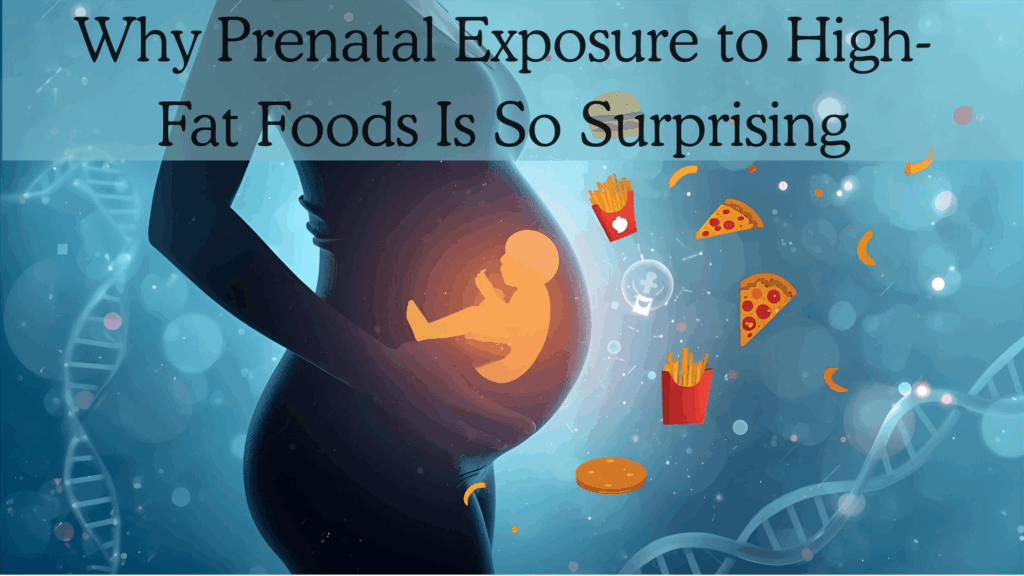
Until recently, experts believed that only maternal dietary intake influenced a child’s future weight and disease risk. But this new research shows that simply inhaling high-fat food aromas during pregnancy may send metabolic signals to the fetus.
Smell is strongly connected to appetite, cravings, and digestion. When the body smells high-fat, energy-dense foods, it prepares for calorie intake and fat storage. Through prenatal exposure to high-fat foods, these signals reach the developing brain and may program babies to prefer unhealthy foods, making them more vulnerable to obesity later in life.
How Prenatal Exposure to High-Fat Foods “Programs” Baby Metabolism
A developing baby constantly receives biological information from the mother: nutrients, hormones, and even sensory cues. Molecules from taste and smell can pass through amniotic fluid and later through breast milk.
Prenatal exposure to high-fat foods may affect the fetal hypothalamus — the brain region that controls appetite, metabolism, and fat storage. This exposure can influence:
- Appetite regulation
- How the body stores fat
- Sensitivity to calorie-rich foods
- Reward-driven eating behavior
The impact isn’t immediate obesity at birth — instead, prenatal exposure to high-fat foods increases the susceptibility to weight gain and metabolic issues later in childhood.
How Maternal Diet Already Shapes Babies
Even before this discovery, strong evidence showed that a mother’s high-fat, sugary, or salty diet during pregnancy and breastfeeding increases:
- A child’s craving for unhealthy foods
- Early-life weight gain
- Long-term risks of diabetes and cholesterol problems
This new research indicates that prenatal exposure to high-fat foods, even without eating junk food directly, may also shape metabolic health before birth.
Implications for Human Health
Although the study was done on animals, researchers believe that prenatal exposure to high-fat foods may affect humans similarly. Key insights include:
- Smell and environmental food cues are not harmless
- Fetal metabolic development may be altered by odor exposure
- Childhood obesity prevention may need to start even earlier — before birth
This research may explain why childhood obesity continues to rise globally, even in families trying to follow healthier pregnancy diets. Today’s world is filled with fast-food aromas, artificial flavors, and strong cooking smells — all of which can contribute to prenatal exposure to high-fat foods.
Should Pregnant Women Be Concerned?
There is no reason for panic. Prenatal exposure to high-fat foods is one factor among many. Here’s a simple overview:
| Factor | Impact on Child |
|---|---|
| Mother’s overall diet quality | Strong effect |
| Prenatal exposure to high-fat foods | Increasing risk |
| Child’s lifestyle and habits later | Major determining factor |
Environmental smell exposure can raise risk, but a child’s nutrition, exercise, and lifestyle play a powerful role in preventing obesity throughout life.
Practical Tips to Reduce Prenatal Exposure to High-Fat Foods
Pregnant women can take easy steps to limit odor exposure:
- Use exhaust fans or open windows during cooking to reduce strong food smells
- Avoid spending long periods near fast-food outlets or deep-frying food stalls
- Prioritize fresh, home-cooked meals with minimal artificial food aromas
- Maintain healthy feeding habits after childbirth — it greatly supports metabolic health
- Keep up with regular prenatal care and a nutrient-rich pregnancy diet
Good pregnancy health includes both nutrition and surroundings.
Why This Research Matters Worldwide
Childhood obesity is rapidly increasing across the globe. In countries like India, frequent exposure to deep-fried foods like pakoras, poori, and samosas means that prenatal exposure to high-fat foods is common in everyday life.
Understanding this risk empowers families to adopt healthier practices during pregnancy.
Expert Perspective
Healthcare specialists believe these findings may change future prenatal health guidance. Important recommendations might include:
- Considering odor exposure during prenatal risk assessments
- Encouraging cleaner, better-ventilated cooking environments
- Educating families about obesity prevention that starts before birth
This research reinforces a powerful message: long-term metabolic health begins inside the womb — and prenatal exposure to high-fat foods can play a major role.
Here are some credible external resources you can link to for your article on “Prenatal Exposure to High-Fat Foods Raises Obesity Risk” — useful for supporting claims and improving trustworthiness:
- Yale School of Medicine – “Mother’s high-fat diet alters metabolism in offspring, leading to higher obesity risk” Yale School of Medicine
- Max Planck Institute for Metabolism Research – “The smell of fatty foods during pregnancy promotes obesity in offspring” Max Planck Society
- BMC Medicine – “The effects of dietary and lifestyle interventions among pregnant women with overweight or obesity on early childhood outcomes” SpringerLink
- Journal of Developmental Origins of Health and Disease – “Effects of prenatal exposure to a ‘junk food’ diet on offspring food preferences and fat deposition”
Looking for holiday food ideas during family celebrations? Don’t miss these Easy 20-Minute Christmas Recipes on SkinnyZine:
https://skinnyzine.com/easy-20-minute-christmas-recipes/