




TMC on Offensive Over SIR has triggered a massive political storm in West Bengal. What was meant to be a routine voter-list update has turned into a high-stakes battle between the Trinamool Congress (TMC) and the Bharatiya Janata Party (BJP).
The ruling TMC has accused the BJP and central agencies of trying to delete genuine voters, particularly from rural, minority, and economically weaker communities. On the other hand, the BJP claims that SIR is essential to remove duplicate, illegal, and ineligible entries from the electoral rolls.
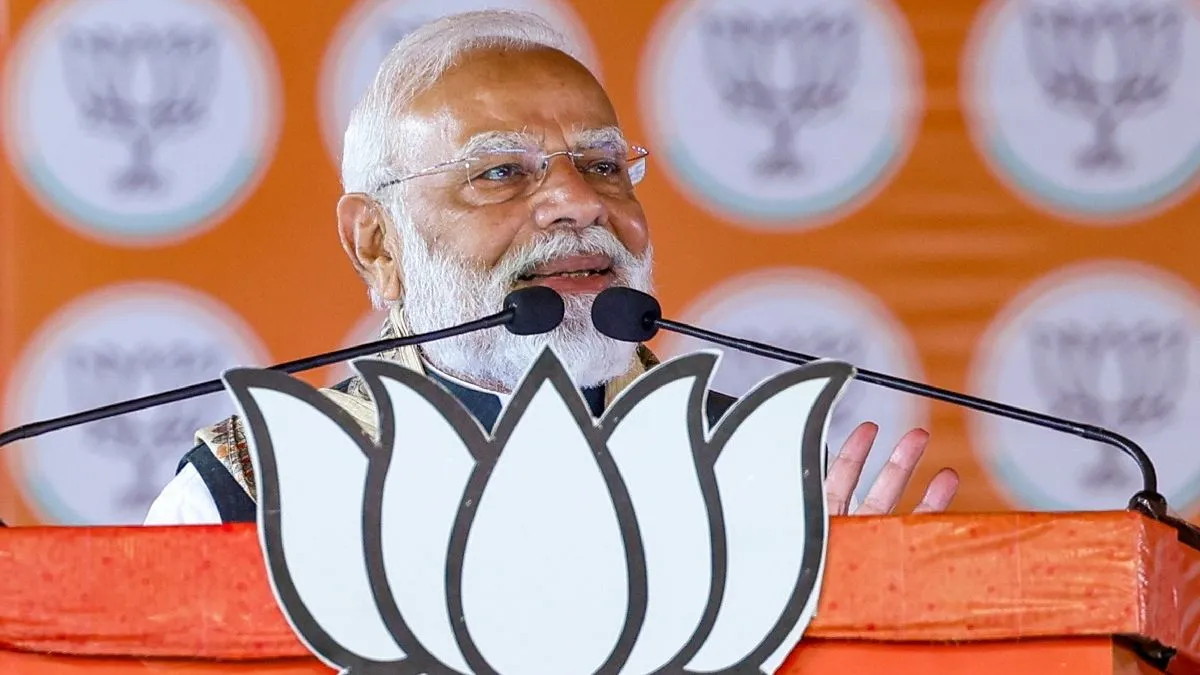
As tension grows, Prime Minister Narendra Modi has reportedly instructed BJP MPs to soften their language and avoid aggressive statements about SIR. This balancing act shows how politically sensitive this exercise has become ahead of the 2026 West Bengal Assembly Elections.
TMC’s Stand: Why the Party Is Strongly Opposing the SIR Drive
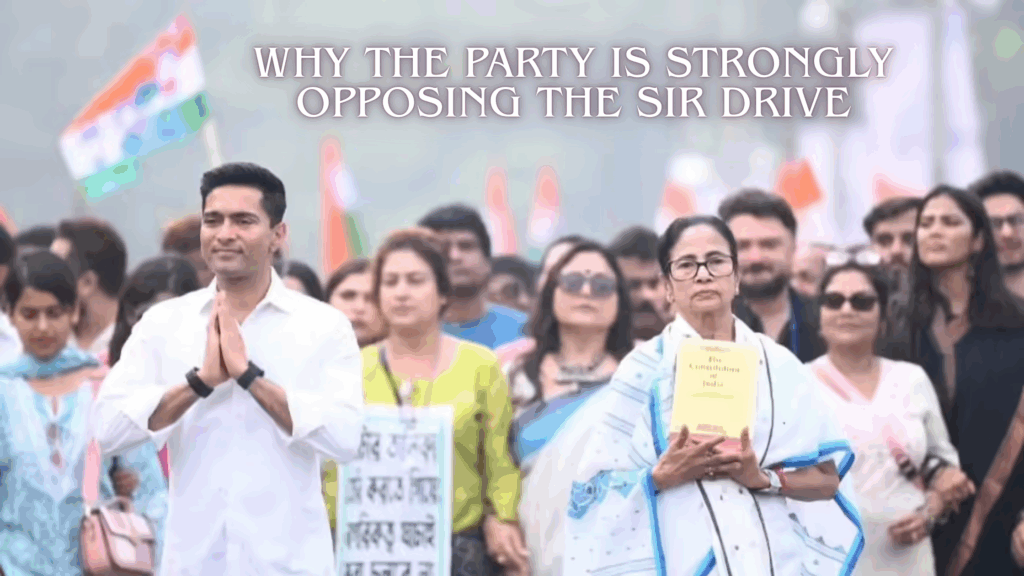
1. Claim of “Silent Invisible Rigging”
TMC on Offensive Over SIR has described SIR as a “silent invisible rigging” strategy, alleging that the BJP intends to weaken TMC’s voter base by deleting legitimate voters. Party leaders claim the process is being misused to manipulate the upcoming elections.
2. Fear of Voter Deletion Among Poor and Marginalised Groups
TMC on Offensive Over SIR alleges that daily-wage earners, migrants, elderly voters, and minority communities are being unfairly targeted. Many are anxious that their names may be removed due to minor documentation issues.
3. Reports of Deaths and Panic
TMC on Offensive Over SIR highlights several claims of voters suffering heart attacks and stress-related panic after being told their names could be removed. The party has used these incidents to emphasize the human cost and emotional pressure created by the SIR process.
4. Warning of Legal Action and Mass Protests
TMC on Offensive Over SIR has announced that it will take legal action and organise large-scale protests if any genuine voter’s name is deleted. District-level monitoring teams have been set up to defend every contested deletion.
5. Connecting SIR to NRC and Citizenship Fears
TMC is framing SIR as a backdoor attempt to implement NRC-like exclusion, stirring fear among communities that worry about losing citizenship rights and identity.
BJP’s Stand: Why the Party Supports the SIR Exercise
The BJP supports the Special Intensive Revision (SIR) exercise as a critical step in ensuring transparent and accurate electoral rolls in West Bengal. According to the party, the process is intended to strengthen the integrity of elections by removing fake, duplicate, or illegal entries while safeguarding the rights of genuine voters. BJP leaders argue that a clean voter list is essential for a free and fair democratic process, and that every legitimate citizen should participate without fear or intimidation.
1. Claim of Cleaning the Voter List
The BJP maintains that the primary goal of SIR is to clean the voter list and ensure that only eligible voters are included. Over time, voter rolls can accumulate duplicate names, fake entries, or outdated information, which can distort election outcomes. BJP emphasizes that this is an administrative exercise, not a political attack, and that all legitimate voters need not worry about losing their voting rights. By conducting the SIR thoroughly, the party claims that it is protecting the sanctity of democracy and making elections more reliable.
2. Targeting Illegal Infiltration
West Bengal has a long history of cross-border migration, which has led to concerns over unauthorised voters being included in the rolls. BJP asserts that SIR will identify and remove these ineligible entries, ensuring that only lawful citizens participate in the elections. The party believes that addressing illegal infiltration is crucial to maintaining the credibility of the electoral process. By weeding out ineligible voters, the BJP positions itself as a proponent of fair elections, ensuring that the political landscape reflects the genuine choices of legitimate residents.
3. Opportunity to Reshape the Electoral Landscape
Beyond administrative reasons, the BJP sees SIR as a strategic tool to influence electoral outcomes in key constituencies. By correcting and verifying the voter lists, the party aims to level the playing field in districts where TMC traditionally holds sway, particularly those with large migrant populations. Updated voter rolls can change the dynamics of closely contested areas, potentially giving BJP an edge in the 2026 Assembly Elections. Leaders argue that a fair and accurate voter list will empower genuine citizens while reducing opportunities for manipulation, aligning with the party’s broader mission to expand its footprint in West Bengal.
4. Public Messaging and Transparency
The BJP also emphasizes the importance of clear communication with the public regarding SIR. Leaders encourage citizens to verify their names, update details, and report discrepancies to the Election Commission. The party insists that SIR is non-partisan and that fears of mass voter deletion are largely misconceptions. By promoting transparency and encouraging civic cooperation, the BJP aims to reassure voters and maintain confidence in the democratic process.
PM Modi’s Intervention: Why He Asked BJP MPs to “Temper the Pitch”
1. Avoiding Fear and Panic Among Voters
The Prime Minister reportedly cautioned BJP MPs not to make bold statements like “lakhs of names will be removed.” Such remarks could trigger panic and backlash among communities.
2. Presenting SIR as a Routine Administrative Process
PM Modi instructed leaders to explain SIR calmly and professionally, projecting it as a standard voter-list revision, not a political cleansing operation.
3. Reducing the Risk of Public Backlash
Aggressive speeches could give the TMC ammunition to portray BJP as anti-people. A softer tone helps BJP remain politically safe while still benefiting from the SIR process.
4. Ensuring Stability Before Elections
Any unrest, protests, or communal tension could damage BJP’s chances in the 2026 Bengal elections. Modi wants a carefully calibrated, low-noise approach.
Why SIR Matters: Political, Social and Electoral Impact
1. Voter List Purification Could Decide the 2026 Election
Even a small change in voter demographics can influence tightly contested constituencies. SIR could significantly reshape Bengal’s political map.
2. Fear of Disenfranchisement
If genuine voters are removed, it may erode people’s faith in democratic processes. TMC is using this fear to mobilise supporters.
3. Risk of Communal Polarisation
Linking SIR with “illegal immigrants” can ignite sensitive social tensions. A misstep could lead to unrest, which the PM wants to avoid.
4. Increased Activism and Legal Battles
Civil society groups and political parties may challenge deletions, leading to courts becoming important players in the SIR debate.
5. Impact on National Image
Any accusation of mass voter deletion or targeting minorities could affect India’s image globally, especially around democratic fairness.
Additional Context and Developments to Watch
The Scale and Method of SIR Implementation
The Scope for Intensive Revision (SIR) involves physically verifying voter details across thousands of polling stations.
Key factors include:
- How quickly field teams complete verification
- Whether verification is manual, digital, or hybrid
- The consistency of procedures followed across districts
Any uneven or inconsistent execution may lead to disputes or appeals.
Role of Booth-Level Officers (BLOs)
BLOs are responsible for:
- Visiting households
- Checking voter residency
- Validating deletions or additions
- Updating real-time records
Their training, workload, and accuracy will significantly influence the final electoral roll quality.
Increased Use of Technology
The Election Commission may rely on:
- Address verification tools
- GIS mapping for booths
- Aadhaar–EPIC seeding where permitted (voluntary)
- Mobile apps for field verification
If technology integration is uneven, some constituencies may see faster or slower corrections, causing political tension.
Verification of Vulnerable and Migrant Populations
Populations most affected by SIR typically include:
- Migrant workers
- Seasonal laborers
- Students living away from home
- Tenants or shifting households
These groups often face higher deletion risks due to address instability. Ensuring they remain on the rolls requires precise verification.
District-wise Variations in Deletions
Some districts may show:
- Higher deletion rates due to urban migration
- Lower deletion rates in stable rural areas
- Sharp inconsistencies pointing to administrative flaws
These differences will drive political arguments as parties interpret the data to support their narratives.
Legal Challenges and Court Monitoring
Major political parties may:
- File complaints with the ECI
- Approach the High Court or Supreme Court
- Demand re-verification in contested booths
Courts can order temporary stays, rechecks or stricter oversight depending on the petitions.
Impact on Upcoming Elections
The timing of SIR will influence:
- Preparations for Lok Sabha/Assembly elections
- Candidate selection based on updated demography
- Ground strategy in marginal seats where even small voter shifts matter
Parties will closely monitor how SIR reshapes voter bases.
Civil Society and Media Monitoring
Independent observers, think tanks, and local organizations may:
- Track anomalies
- Report voter grievances
- Publish district-wise analysis
- Media narratives will heavily shape public perception—whether SIR is viewed as a clean-up exercise or a controversial process.
Election Commission of India – Voter List & SIR – Official guidelines and updates on voter roll revision and the Special Intensive Revision (SIR) process.
During the SIR controversy, political tensions in Parliament also intensified, reflecting broader unrest in governance. For instance, the Winter Session of Parliament began with high tension, highlighting debates over administrative decisions and political accountability.