


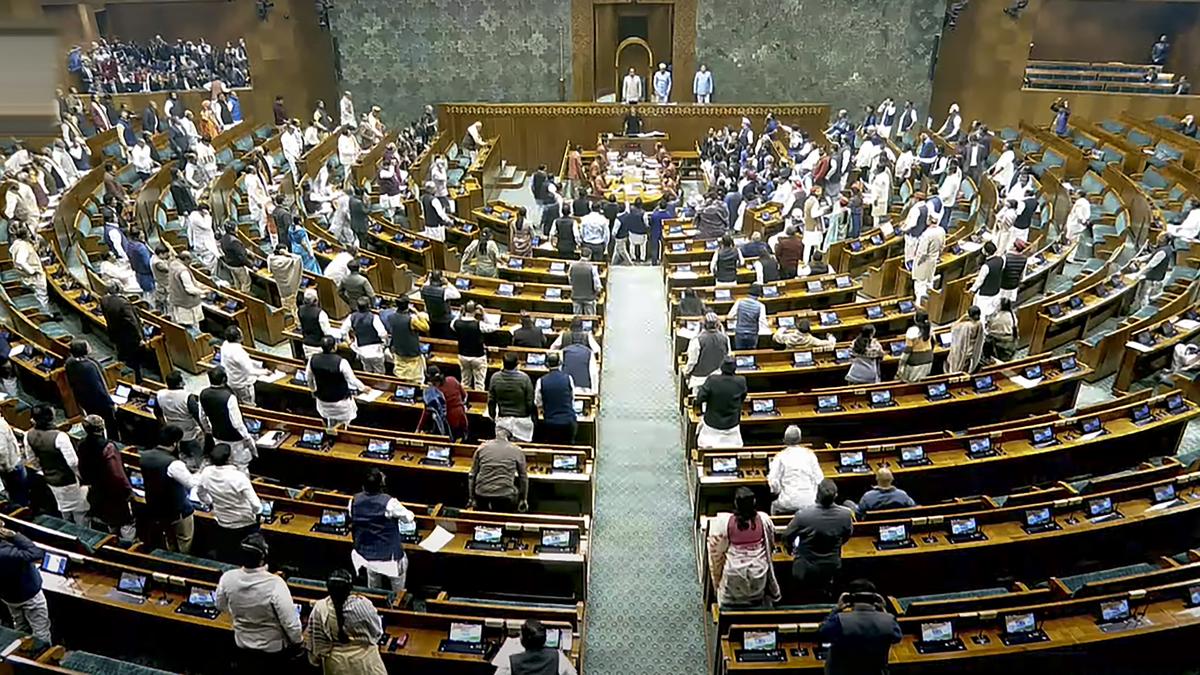
The 2025 Winter Session of the Indian Parliament commenced on December 1 amid high political tension and a charged atmosphere. From the first hour, proceedings in the Lok Sabha were disrupted by opposition protests, leading to multiple adjournments and highlighting growing political polarization.
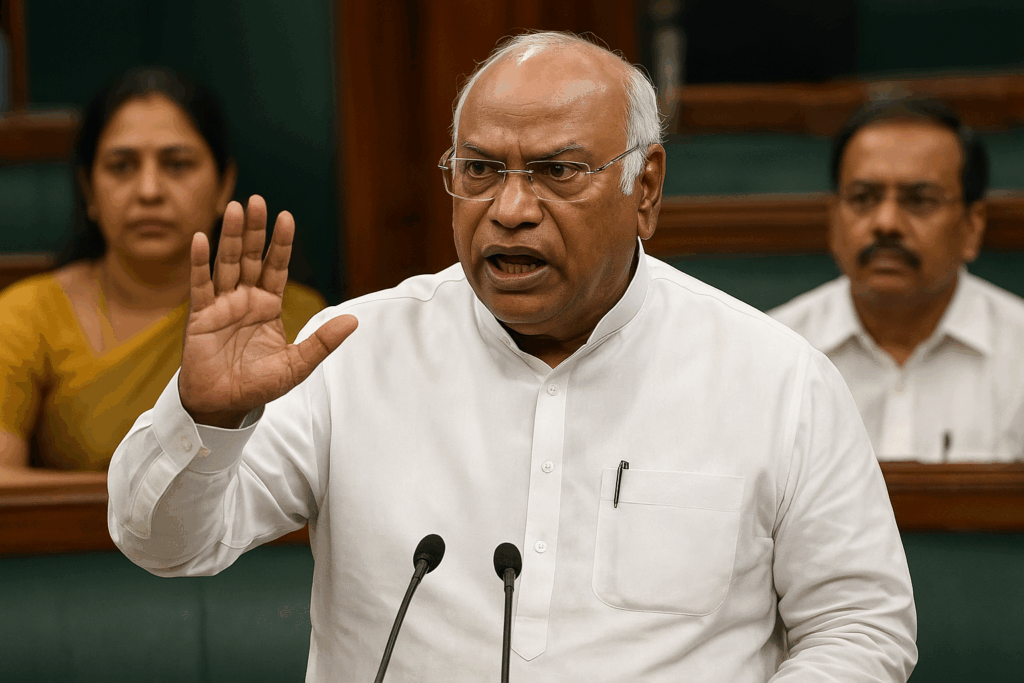
Opposition leader Mallikarjun Kharge sharply criticized the government, accusing it of prioritizing theatrics over governance and undermining parliamentary norms for over a decade. The first day of the session underscored deep divides between the ruling party and opposition, raising questions about Parliament’s effectiveness and the democratic process.
Scheduled to last until December 19, this Winter Session will cover a range of legislative business, including key bills, financial proposals, and discussions on pressing national issues. However, the turbulence of the opening day has cast doubt over whether Parliament can function effectively throughout the session.
Opening of the Winter Session
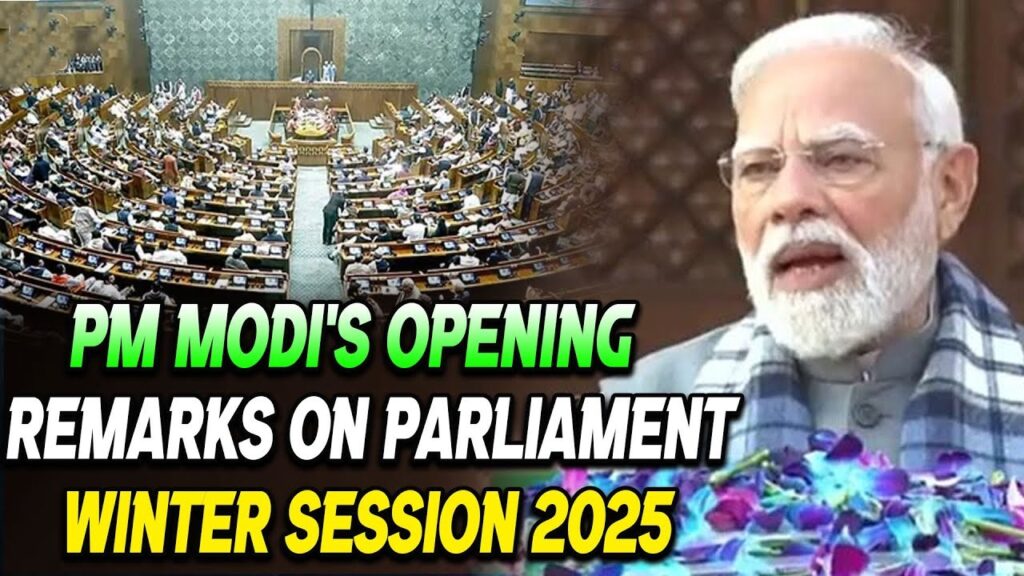
Formal Commencement
The Winter Session officially began at 11:00 AM in both Houses of Parliament. Traditionally, the session starts with formal addresses, roll call, and laying out the legislative agenda by the government. However, this time the proceedings faced immediate disruptions. Opposition MPs staged a protest demanding discussion on the Special Intensive Revision (SIR) of electoral rolls and other critical issues.
Early Disruption in Lok Sabha
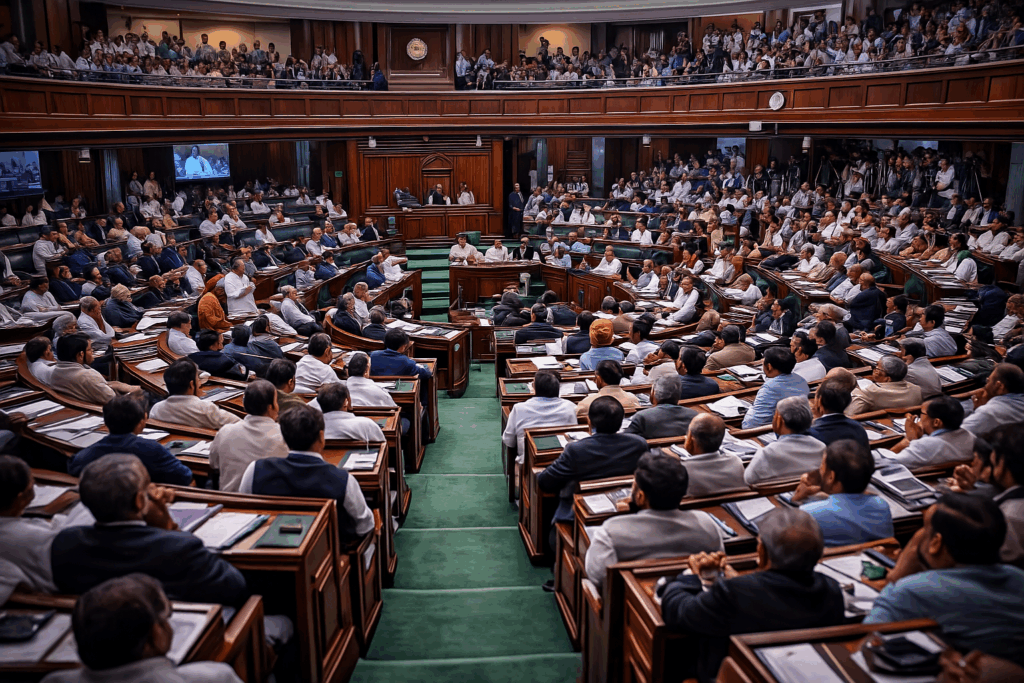
Within the first 20 minutes, the Lok Sabha witnessed loud slogans and protests, prompting the Speaker to call for order. Despite repeated appeals, MPs continued to protest from the Well of the House, forcing the Speaker to adjourn proceedings until 12:00 PM. When the House reconvened, disruptions resumed, resulting in a further adjournment until 2:00 PM.
This highlighted the tension between the ruling party and opposition and set the tone for a confrontational session.
Reasons Behind the Disruptions

Opposition Demands Over Electoral Roll Revision
The primary reason for the protests was the demand for a parliamentary discussion on the Special Intensive Revision (SIR) of electoral rolls. Opposition parties argued that the SIR process raised concerns over mismanagement and potential irregularities in voter lists.
The opposition demanded a full debate to ensure transparency and accountability before proceeding further, claiming that the electoral roll revision could impact voter representation and democratic fairness.
Concerns Over Session Duration
Another reason for opposition dissatisfaction was the unusually short duration of the Winter Session, consisting of just 15 sittings. Leaders argued that the truncated session limits debate on critical issues and allows the government to push its legislative agenda without sufficient scrutiny.
The combination of SIR concerns and session duration became the focal point of protests, prompting disruptions that prevented normal parliamentary business from proceeding.
Government’s Response
Urging Cooperation and Constructive Debate
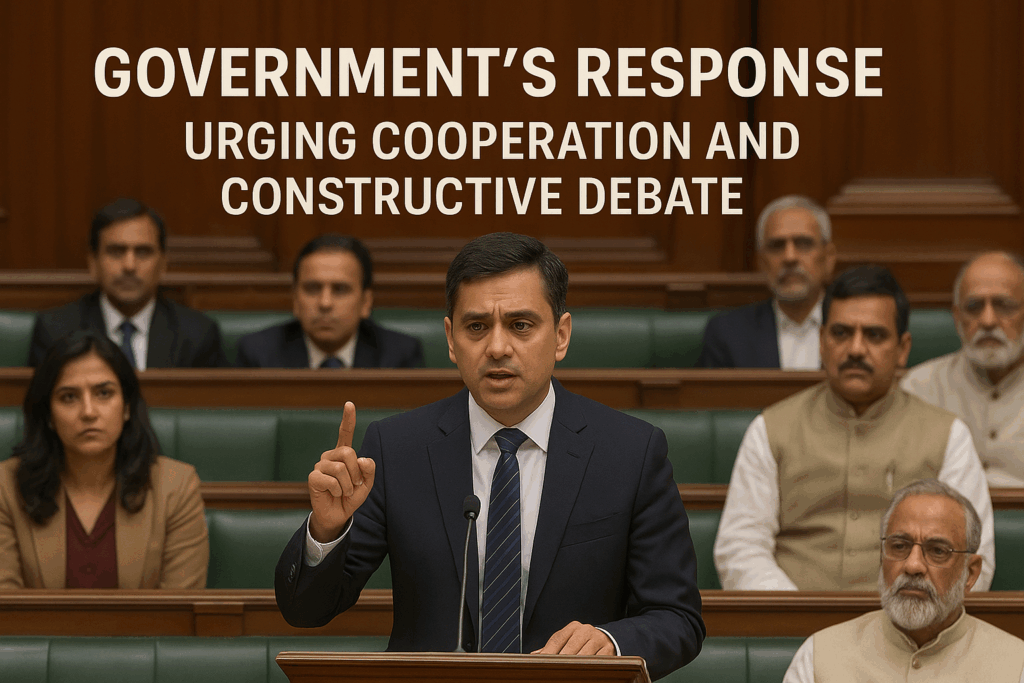
The government appealed to all parties to cooperate, emphasizing that Parliament is intended for constructive debate, not political theatrics. Ministers urged opposition leaders to allow legislative business to continue, including the introduction and discussion of key bills.
The government maintained that while debate is welcome, the legislative agenda would follow parliamentary procedures, and not all opposition demands could be addressed immediately.
Legislative Agenda Amidst Chaos
Despite the disruptions, the government introduced several important bills during brief intervals between adjournments. These included amendments to central taxation laws, GST adjustments for certain states, and new health-related cesses. Supplementary demands for fiscal year 2025–26 grants were also tabled.
However, continuous interruptions meant that Question Hour, Zero Hour, and detailed debates could not take place as scheduled, reducing parliamentary productivity.
Kharge’s Criticism of the Government
Allegations of “Drama Over Democracy”
Mallikarjun Kharge criticized the government for prioritizing theatrics over governance. He accused the ruling party of undermining parliamentary decorum and democratic processes for over 11 years.
Kharge highlighted instances from previous sessions where bills were rushed through in minutes without adequate debate or scrutiny, arguing that such practices erode the integrity of democratic institutions.
Focus on SIR and Electoral Accountability
Kharge emphasized the importance of discussing the SIR exercise in Parliament. He alleged that electoral officers were overburdened, with some facing severe health risks due to the intensity of the work. The opposition leader maintained that electoral integrity is crucial for democracy and must be safeguarded through transparent legislative debate.
Impact on Parliamentary Functioning
Delays in Legislative Business
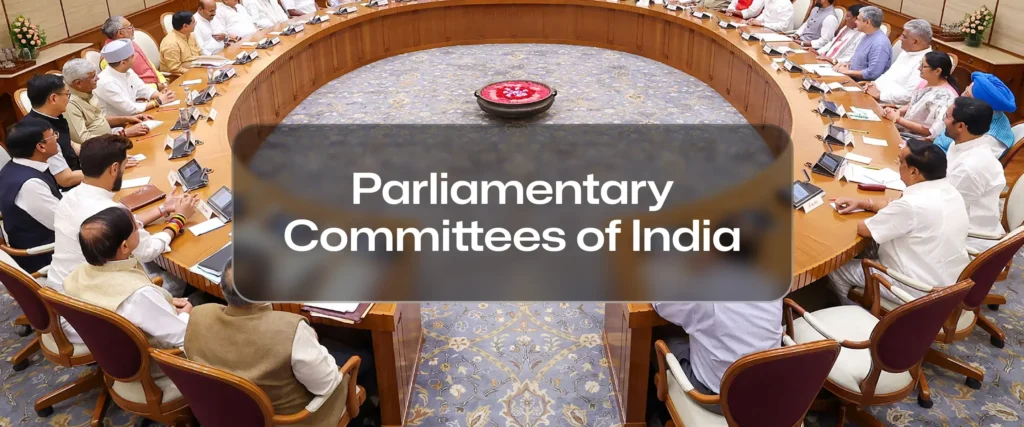
The disruptions on the first day caused significant delays. Scheduled sessions for Question Hour and Zero Hour were postponed, reducing the time available for detailed discussions on bills and policy matters.
Risk of Rushed Legislation
Introducing bills amid continuous disruption raises concerns about the quality of legislative scrutiny. Hastily passed laws may lack proper examination, potentially affecting policy outcomes and public interest.
Erosion of Public Trust
Frequent adjournments and political theatrics can erode public trust in parliamentary institutions. When Parliament is seen as a ground for slogans rather than constructive debate, citizens may feel their concerns are not adequately represented.
Increased Political Polarization
The focus on SIR and other contentious issues has heightened political polarization. If not addressed transparently, disputes over electoral procedures could deepen divisions among political parties and the public.
Key Legislative Items on the Agenda
Proposed Bills
The government’s legislative agenda includes a mix of economic, social, and administrative bills. Key items include:
- Taxation and Excise Amendments: Changes to excise duties on selected goods to increase government revenue.
- GST Adjustments: Amendments for state-specific GST compliance, especially in Manipur.
- Health and Security Cess: Introducing new levies to fund health initiatives and national security measures.
- Higher Education Reforms: Bills aimed at restructuring regulatory frameworks for universities and colleges.
Potential Implications
If passed without sufficient debate, these bills could have wide-ranging effects on economic policy, education, and governance. Opposition parties have insisted on detailed scrutiny to ensure public accountability and policy transparency.
What to Expect in the Coming Days
Continuing Debates on SIR
The opposition has signaled that it will continue pressing for a parliamentary debate on the SIR exercise. The government’s response—through negotiation or procedural maneuvers—will define the tone of subsequent sittings.
Scrutiny of Key Legislation
The session is expected to cover important financial bills, GST amendments, and reforms in education and health. The depth of debate and opposition engagement will influence how these laws are implemented and perceived.
Public and Media Attention
Media coverage and public perception will play a crucial role in shaping the political narrative. The portrayal of parliamentary disruptions as necessary protest or obstructionism will impact voter sentiment and political strategy.
Opposition Strategy
The unity and approach of opposition parties will be critical in shaping parliamentary proceedings. Sustained protests or strategic negotiations may determine whether the session achieves meaningful legislative outcomes or remains largely symbolic.
Larger Significance of the Session
Democratic Accountability
The events of Day 1 underscore the importance of parliamentary scrutiny and accountability. Robust debates are essential to ensure that legislation is transparent, fair, and serves public interest.
Electoral Integrity
The SIR exercise is central to ensuring fair elections. Parliament’s role in scrutinizing and debating electoral reforms is vital for maintaining democratic legitimacy and voter confidence.
Legislative Efficiency vs. Democratic Norms
Balancing the government’s need to pass legislation efficiently with the opposition’s demand for debate is a key challenge. How Parliament manages this balance will affect the perception of governance and institutional credibility.
Implications for Governance
Delays or disruptions in parliamentary proceedings could impact policy implementation and public administration. Ensuring effective debate and scrutiny is essential for good governance and policy efficacy.