




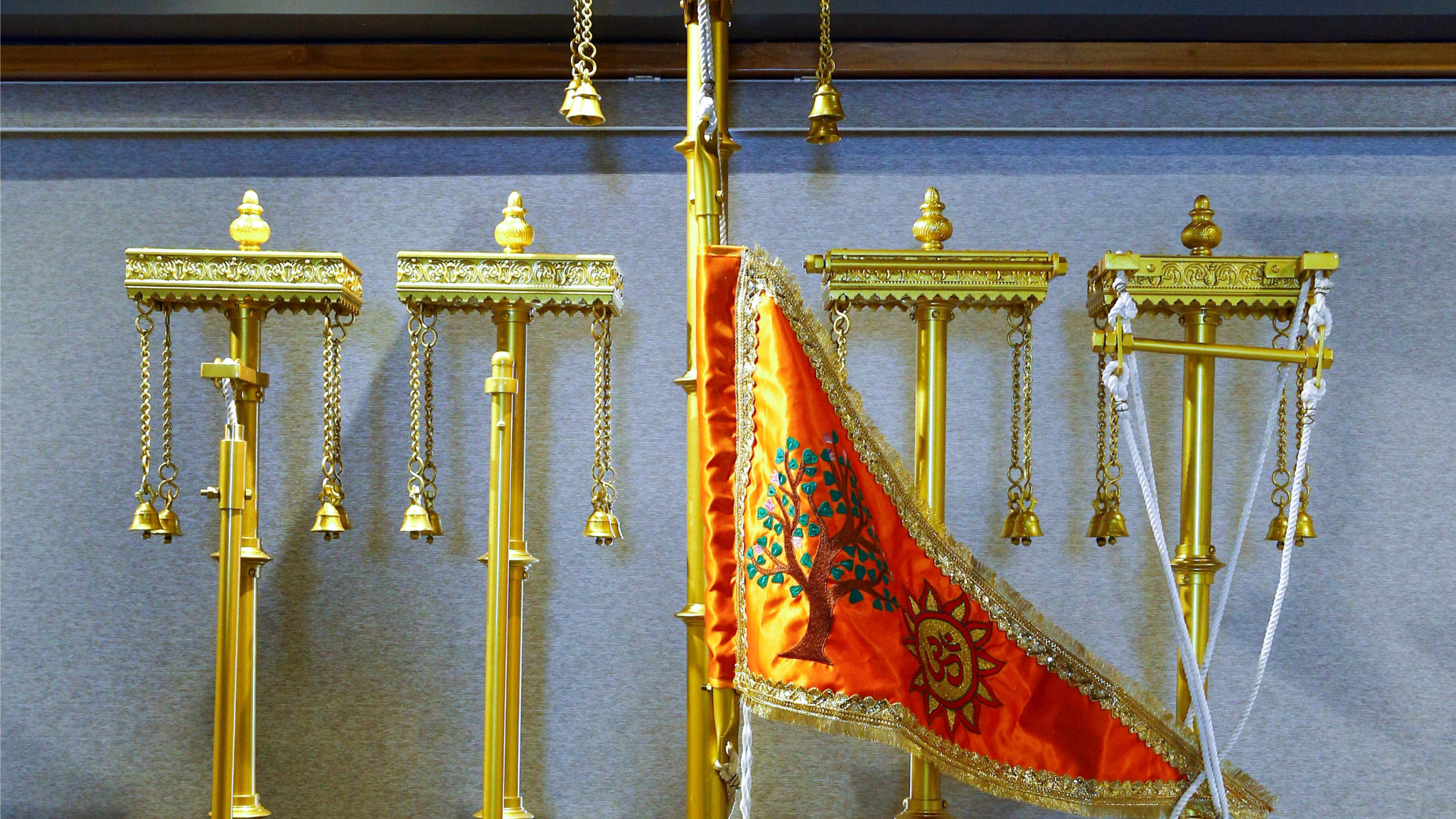
The magnificent Ayodhya Ram Temple stands today as one of the most significant cultural, spiritual, and architectural landmarks of modern India. Amid its grand design, one element attracts profound attention—the ‘Dharma Dhwaj’, the sacred flag that rises high above the temple’s pinnacle. Adorned with three powerful symbols—the Sun, Om, and the Tree—the Dharma Dhwaj represents the philosophical, cosmic, and ecological foundations of Sanatana Dharma.
What Is the ‘Dharma Dhwaj’? Understanding Its Spiritual Importance
Meaning of ‘Dhwaj’ in Indian Tradition
In Hindu culture, the word Dhwaj means “flag,” but its role extends far beyond decoration. It symbolizes:
- Victory of Dharma over Adharma
- Divine protection and blessings
- Spiritual presence of the deity
- Guidance for devotees
A Dhwaj placed atop a temple serves as a visual declaration of Dharma, reminding people of righteousness.
Why the Ram Temple’s Dharma Dhwaj Is Unique
The Ayodhya Ram Mandir’s flag is distinctive because:
- It features three Vedic symbols—Sun, Om, and Tree
- It is anchored at the highest architectural point
- Its motifs are taken directly from scriptural references
- It represents cosmic energy, spiritual vibration, and life on earth
This makes the Dharma Dhwaj not only an artistic symbol but also a profound philosophical statement.
Symbol 1: The Sun – Light, Lineage & Cosmic Energy
The Sun in Vedic Scriptures
The Sun (Surya) is one of the most revered symbols in the Vedas. It is described as:
- The giver of life
- The source of light and energy
- The eye of the universe (Jagat Chakshu)
- The witness to every action
The Rigveda’s hymns praise the Sun as the deity who sustains all creation.
Lord Rama’s Connection to Surya Vansh
Lord Rama belongs to the Suryavansh (Solar Dynasty), making the Sun symbol deeply relevant. It represents:
- His ancestral lineage
- The qualities of valor, purity, and truth
- The ideal of living like the Sun—bright, steady, and selfless
Thus, the Sun signifies both cosmic energy and Rama’s royal heritage.
Sun as a Symbol of Dharma
In Indian philosophy, the Sun symbolizes:
- Truth (Satya)
- Right conduct (Dharma)
- Clarity and wisdom
- The dispelling of ignorance
Placing the Sun on the Dharma Dhwaj signifies the victory of truth and the guidance of Dharma.
Universal Significance of the Sun
Across civilizations—Greek, Egyptian, Incan, and Japanese—the Sun is worshipped as the supreme life-giver. Its presence on the Ram Mandir flag symbolically unites global spiritual traditions.
Symbol 2: Om – The Sound of Creation & Universal Consciousness
What Is Om (ॐ)?
Om is considered the primordial sound of creation—the vibration from which the universe emerged. It represents the cosmic trinity:
- A – Brahma (creation)
- U – Vishnu (preservation)
- M – Shiva (dissolution)
Om in Hindu Philosophy
The Mandukya Upanishad states that Om is the sound form of Brahman, the ultimate reality. When chanted, Om harmonizes the:
- Body
- Mind
- Soul
with the universe.
Why Om Is Featured on the Dharma Dhwaj
Om symbolizes:
- Universal harmony
- Spiritual awakening
- The presence of the divine vibration
- The eternal principles of Sanatana Dharma
It represents the inner spiritual journey that complements the outer clarifying light of the Sun.
Om as a Symbol of Peace
Used widely in meditation and yoga, Om is recognized as a symbol of:
- Global peace
- Inner stillness
- Mindfulness
Its presence on the flag reflects the temple’s message of universal harmony.
Symbol 3: The Tree – Ecology, Life & Protection
The Tree in Indian Spirituality
In Indian culture, trees are considered sacred beings. The Peepal, Banyan, and Neem carry spiritual significance. Trees symbolize:
- Life
- Protection
- Fertility
- Continuity
- Wisdom
Tree Symbol on the Dharma Dhwaj
On the Ram Temple flag, the tree stands for:
- Ecological balance
- Protection of life
- Connection between earth and sky
- Growth and rootedness
- Nature’s nurturing presence
Connection Between Trees and Lord Rama
In Ramayana:
- Rama spent 14 years in the forests
- Many key events occurred under sacred trees
- Trees sheltered, guided, and nourished Rama and Sita
The tree symbol honors the environmental foundation of the Ramayana.
Modern Ecological Message
At a time of environmental concerns, the tree symbol carries a message:
- Protect nature
- Live sustainably
- Respect the ecological cycle
- Coexist with all beings
It makes the Dharma Dhwaj a spiritual and ecological symbol.
Why These Symbols Appear Together on the Dharma Dhwaj
A Balanced Representation of the Universe
The trio symbolizes:
- Sun → External cosmic light
- Om → Inner spiritual light
- Tree → Life on earth
Together, they create a holistic spiritual worldview.
Rooted in Sanatana Dharma
Sanatana Dharma teaches:
- Harmony with the universe
- Alignment of body, mind, and nature
- Balance between human and ecological systems
These three symbols represent these eternal principles.
Completeness of Creation
The Dharma Dhwaj shows the complete cycle of existence:
- Energy
- Consciousness
- Life
This makes the flag a visual interpretation of cosmic philosophy.
Role of Temple Flags in Hindu Tradition
Historical Significance
Flags have been used in ancient temples because they symbolize:
- Power
- Auspiciousness
- Protection
- Divine presence
Dhwaj in Itihasa Traditions
Examples include:
- Hanuman Dhwaj on Arjuna’s chariot
- Garuda flag of Lord Krishna
- The Sun flag of the Solar Dynasty
The Ram Temple continues this epic legacy.
Rituals Connected to Dhwaj
The flag is not merely installed; it is worshipped annually. Dhwaj-puja includes:
- Offering flowers
- Reciting mantras
- Seeking divine blessings
The Dhwaj becomes a spiritual conduit linking devotees with the divine.
How the Dharma Dhwaj Enhances the Architectural Aura of Ram Mandir
Spiritual Crown of the Temple
The Dharma Dhwaj acts as the temple’s crown, stating the presence of Rama’s divinity.
Visible Beacon of Dharma
From afar, the flag guides pilgrims, symbolizing:
- Light
- Righteousness
- Divine energy
Integrating Earth and Sky
The flag flutters between earth and sky, representing:
- The cosmic connection
- The union of the physical and spiritual planes
This completes the temple’s sacred geometry.
Interpreting the Combined Philosophical Message
Cosmic Wisdom
The Sun symbolizes cosmic energy, reminding humanity to act with clarity and truth.
Spiritual Discipline
Om inspires inward reflection, meditation, and harmony.
Ecological Balance
The tree urges humans to protect creation and coexist peacefully.
Together, they represent the tri-fold path of Dharma:
- Light
- Awareness
- Life
Why This Matters for Devotees Visiting Ayodhya
A Reminder of Lord Rama’s Teachings
The Dharma Dhwaj embodies the ideals of:
- Courage
- Discipline
- Compassion
- Spiritual purity
A Source of Strength
Many believe the fluttering flag radiates divine energy, blessing all who witness it.
Identity of Faith
For devotees, the Dharma Dhwaj represents the spiritual identity of the Ram Temple and the eternal presence of Lord Rama.